

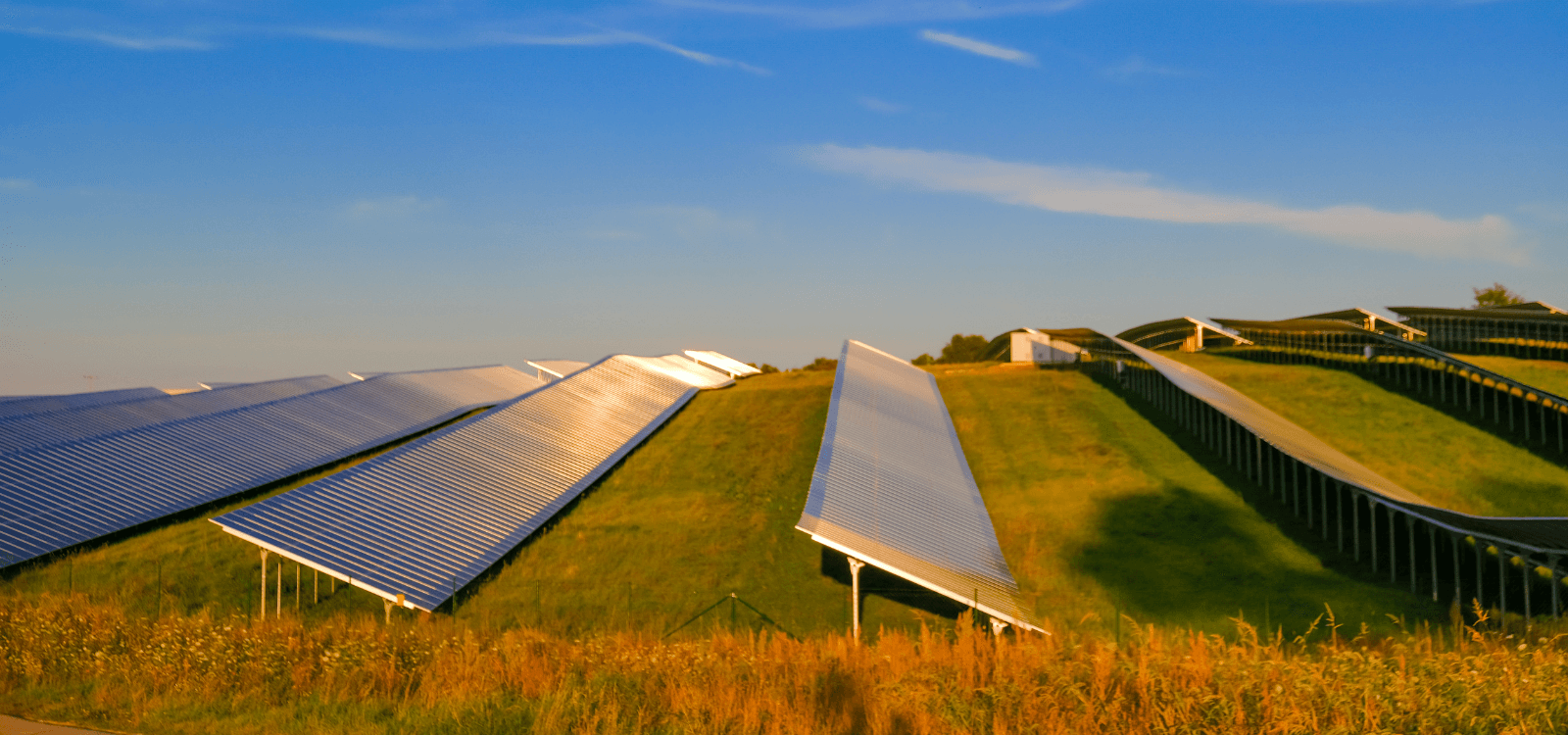
Lightstar launched New York's first agrivoltaics project, where hay grows under solar panels powering 466 homes. How farmland and solar can share land.
In September 2025, Lightstar Renewables celebrated the launch of New York's first agrivoltaics project, the Plains Road project at DiMartino Farm in Montgomery. The solar array is built so tractors can still plant and harvest hay underneath it.
The project powers about 466 homes a year, and two acres are set aside for vegetable farming by new farmers. The land keeps producing food while it produces clean energy.
Here is how the Plains Road project works, why agrivoltaics matters for farmland debates, and where the model is spreading.
What Is the Plains Road Agrivoltaics Project?
The Plains Road project is New York's first agrivoltaics project, located at DiMartino Farm in Montgomery, New York, where solar panels share land with active hay production, according to Lightstar Renewables.
The key details:
- ●Developer. Lightstar Renewables.
- ●Location. DiMartino Farm, Montgomery, New York.
- ●Output. Enough to power about 466 homes a year.
- ●Farming. Hay is planted and harvested around the array with standard equipment.
- ●New farmers. Two acres are set aside for vegetable production by new entry farmers.
The ribbon-cutting drew state officials, agricultural leaders, and partners including American Farmland Trust and Solar Agricultural Services.
What Is Agrivoltaics?
Agrivoltaics is the practice of using the same land for both solar power and agriculture, with arrays designed so crops can grow or animals can graze alongside the panels.
Common approaches include:
- ●Crops between or under panels. Arrays raised or spaced so equipment can pass through.
- ●Grazing. Sheep or other livestock grazing vegetation under the panels.
- ●Pollinator habitat. Native plants that support bees and other pollinators.
- ●Specialty crops. Shade-tolerant crops that benefit from partial cover.
The goal is to keep farmland productive instead of converting it entirely to energy.
How Is an Agrivoltaic Array Designed Differently?
An agrivoltaic array is designed around the farm's needs first, so panel height, row spacing, and layout leave room for equipment, crops, or animals.
A conventional ground-mounted array packs panels close together and low to the ground to maximize power per acre. That leaves little room for anything else.
Agrivoltaic designs make different trade-offs:
- ●Wider rows. Spacing that lets tractors and harvest equipment pass between panels.
- ●Taller mounting. Panels raised high enough for crops or grazing underneath.
- ●Crop-aware layout. Arrays oriented to balance sunlight for both panels and plants.
- ●Access planning. Gates, roads, and fencing designed around farm operations.
At Plains Road, the array was built so standard equipment can plant and harvest hay around it.
Why Do Farmers and Advocates Support It?
Farm groups see agrivoltaics as a way for solar to strengthen farms rather than replace them.
Linda Garrett, a regional director at American Farmland Trust, said: "Lightstar has created a model that truly puts farmers first. This project shows how solar development can strengthen rather than compromise agricultural operations."
Assembly Member Brian Maher said the project "demonstrates how we can honor our agricultural heritage while meeting our clean energy goals."
Solar lease income can also help keep farms financially viable. A Cornell study found that farmers who lease land for solar are more likely to reinvest in their farms.
We don't have to choose between farmland and solar. With smart design, we can have both.
Why Does Agrivoltaics Matter for Farmland Debates?
Loss of farmland is one of the most common objections to large solar projects, and agrivoltaics offers a way to address it directly.
That debate is playing out in New York. In Madison County, officials opposed a large solar farm they said would take 20% of a town's prime farmland.
Projects designed for dual use can change that conversation. When land stays in production, the trade-off between energy and agriculture shrinks.
Where Else Is Agrivoltaics Growing?
Agrivoltaics is spreading through pilot programs and new projects across several states.
Examples:
- ●Illinois. Lightstar permitted its 4.95 MW Nesler Road agrivoltaics community solar project in Kane County in 2024, growing hay for livestock and powering about 1,100 homes.
- ●New Jersey. The state approved 16 dual-use solar projects totaling 52 MW under its pilot program.
- ●Globally. In China, thousands of sheep graze under panels at what will be the world's largest solar farm.
How Does Agrivoltaics Benefit Farmers?
Agrivoltaics can give farmers a stable new income stream while keeping land in production.
The benefits:
- ●Steady income. Lease payments that don't depend on crop prices or weather.
- ●Productive land. Hay, crops, or grazing continue alongside the panels.
- ●Farm succession. More stable finances can help the next generation keep farming.
- ●Community support. Projects that preserve farming tend to face less local opposition.
In an industry that's often unpredictable, that stability can help keep family farms viable.
What Does This Mean for Existing Solar Owners?
Land-use conflicts make new solar harder to site, which makes existing systems that are already built and permitted more valuable.
Many commercial and community solar systems installed in the 2010s are losing output to aging inverters or degraded panels. Repowering an aging PV system restores that output without taking any new land.
Start With a Ballpark Estimate
If you own an existing commercial or community solar system, find out what your existing solar project may be worth before deciding whether to repair, repower, or sell.
Sources: PR Newswire, "Lightstar Renewables Celebrates Successful Launch of New York's First Agrivoltaics Project"; PR Newswire, "Sustainable Power Meets Agri-Innovation with Lightstar's New Agrivoltaics Project in Illinois"
Ready to Discuss Your Project?
Get your instant estimate or talk to our team about your legacy solar project.


