

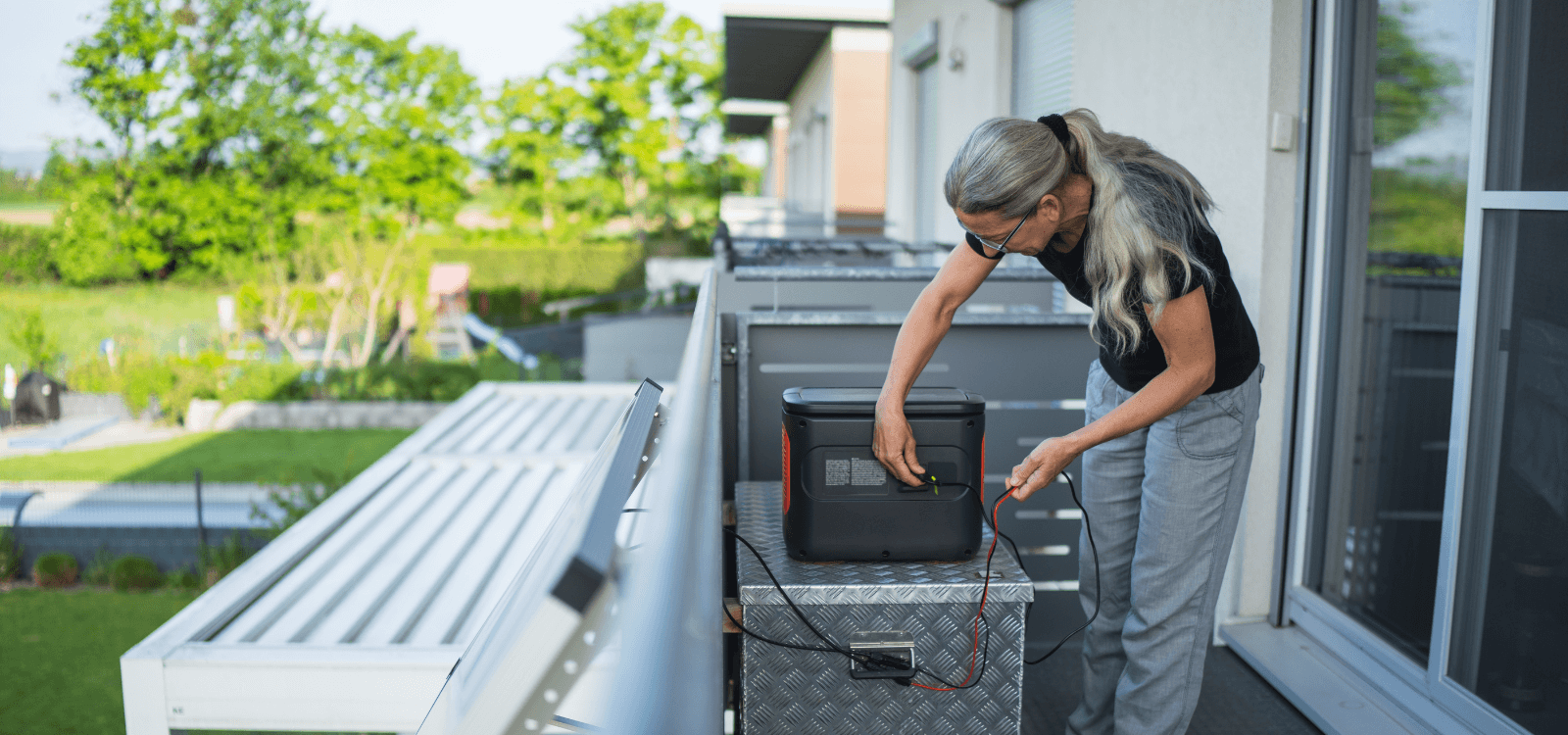
Plug-in balcony solar systems are widely used across Europe, with more than 700,000 installed in Germany alone. In the U.S., new state legislation and safety standards could soon make these simple plug-in solar panels more accessible to renters and apartment residents.
Plug-In Solar Gains Momentum in the U.S.
Small plug-in solar systems are widely used across Europe. In the United States, they have remained in a regulatory gray area. That may be starting to change.
Often called balcony solar or plug-in solar, these systems can be mounted on a balcony railing and plugged directly into a standard 120-volt outlet to power appliances inside the home. They do not require full rooftop installation, making them one of the simplest forms of distributed generation available.
How Plug-In Solar Works in Practice
A recent example in the Bronx shows how these systems are being deployed. Nonprofit Bright Saver installed a 220-watt panel on a residential balcony. The system is expected to generate about 15% to 20% of the household’s electricity and save roughly $100 per year.
Larger systems are also available. An 800-watt plug-in unit, priced around $1,099, can power appliances such as refrigerators and electronics during daylight hours. In New York, lawmakers estimate that a system of this size could reduce annual electricity bills by about $279 on average.
These systems are small, but they can still offset a meaningful portion of household consumption, especially during peak daytime use.
Europe Shows What Scale Looks Like
Plug-in solar is already established in Europe. Germany alone has installed more than 700,000 systems, and some retailers, including Ikea, sell them directly to consumers.
The concept is simple: lower upfront cost, minimal installation, and immediate access to solar power without structural changes to the building.
Why the U.S. Has Lagged
In the United States, adoption has been slower due to regulatory barriers. Plug-in systems are not explicitly illegal in most states, but utilities often require the same interconnection approvals used for full rooftop solar systems. That process can involve fees, applications, and long timelines, which undermines the simplicity of plug-and-play systems.
Policy Is Starting to Shift
Utah became the first state to pass a law explicitly allowing plug-in solar systems. The law permits systems up to about 1,200 watts to operate without a formal interconnection agreement, as long as the equipment meets certified safety standards.
Momentum is building beyond Utah. As of early 2026, lawmakers in 28 states and Washington, D.C., have introduced legislation aimed at allowing plug-in solar and removing traditional interconnection requirements for very small systems. States such as New Hampshire, Vermont, New Jersey, and Illinois are already advancing related bills.
Safety and Grid Concerns
Safety standards are also evolving. UL Solutions introduced a testing protocol for plug-in solar devices in early 2026 to support national certification.
Utilities have raised concerns about electricity flowing back into the grid or stressing local circuits. Advocates argue that systems under 1,200 watts are small enough that most of the electricity is consumed immediately within the home, limiting those risks.
Expanding Access to Solar
If more states adopt similar policies, plug-in solar could expand access to millions of households that cannot install rooftop systems. That includes renters and apartment residents, who have historically been excluded from distributed solar adoption.
These systems will not replace large-scale solar or rooftop installations. But they offer a low-cost, accessible entry point that could broaden participation in clean energy.
The question is no longer whether the technology works. It is whether regulation will adapt fast enough to allow it to scale.
Ready to Discuss Your Project?
Get your instant estimate or talk to our team about your legacy solar project.


