

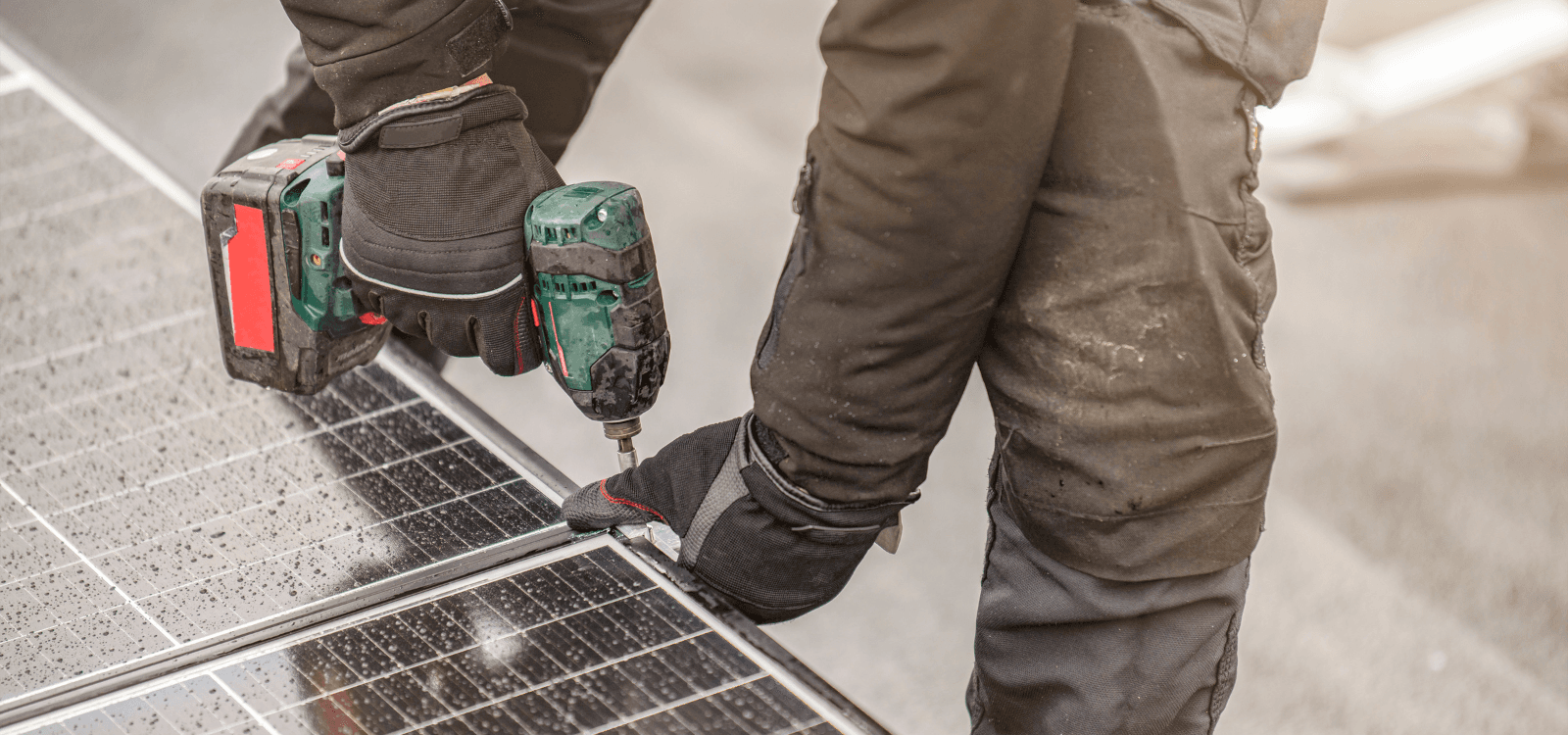
A 30-year field study from Switzerland shows many solar panels still produce over 80% of their original output after three decades, with degradation closer to 0.25% per year. The findings challenge common financial assumptions and reshape how we think about mid-life solar assets.
Solar Panels Don’t “Die” at 25 Years. The Data Says Otherwise.
The idea that solar panels stop working after 25 years doesn’t hold up.
That number mostly comes from warranty language.
It doesn’t reflect how panels actually perform in the field.
And new long-term data reinforces that gap between assumption and reality.
What 30+ Years of Field Data Actually Show
A recent study led by Ebrar Özkalay at the University of Applied Sciences and Arts of Southern Switzerland examined six grid-connected solar projects installed between 1987 and 1993.
After more than 30 years of operation, most systems were still producing over 80% of their original output.
Across all six sites, the average degradation rate was about 0.25% per year.
That’s far below the 0.5% to 0.8% annual degradation often used in financial forecasts.
In simple terms, these panels aged slowly.
That challenges a common assumption in asset valuation: that solar projects rapidly lose value once warranties expire.
Why Degradation Rates Vary
The study also explains why performance differs across sites.
Two main factors stood out:
- ●Heat exposure: Panels in warmer, lower-altitude areas degraded faster.
- ●Material quality: Differences in encapsulants and internal components created measurable gaps, even among similar designs.
Climate matters.
Manufacturing quality matters.
But rapid failure after 25 years? That narrative doesn’t match what these systems show.
How This Compares to Earlier Research
Earlier long-run research, including work by national laboratories in the U.S., often observed average degradation closer to 0.75% per year.
That’s still manageable.
But this Swiss dataset suggests that well-built systems in stable operating environments can degrade even more slowly.
This study covers a small sample in similar climates. It’s not a global average.
At the same time, that consistency helps isolate long-term aging without wildly different weather or maintenance practices distorting the results.
The larger test is still ahead.
Hundreds of gigawatts of solar installed in the 2000s and 2010s are now entering mid-life across very different climates. The next decade will show whether these slower degradation patterns hold at scale.
If you want to understand how aging impacts valuation, we explain how we assess long-term performance and risk in our overview of how we evaluate legacy solar projects.
What This Means for Owners of Older Solar Projects
For owners of mid-life and older systems, the takeaway is straightforward.
Many projects still have useful life left.
Even if performance isn’t exactly where the original projections placed it.
The real issue often isn’t panel failure.
It’s operational drift.
- ●Original developers move on
- ●Maintenance becomes inconsistent
- ●Ownership structures get messy
- ●Documentation gets harder to track
Over time, the project starts to feel like a liability.
Even though it’s still producing electricity.
Many 10- to 20-year-old solar assets are under-managed, not under-performing.
That distinction matters.
Aging Solar Doesn’t Mean End of Life
There’s a difference between:
- ●Warranty expiration
- ●Revenue underperformance
- ●And the true technical end of life
Those aren’t the same event.
Panels can keep generating at 80% or more of the original output after three decades.
Financial models often assume a decline faster than real-world data shows.
If you’re unsure where your project stands, you can review eligibility criteria to see whether your system fits our acquisition profile: Check if your project qualifies
Where We Fit In
At Do Good Energy, we focus on legacy commercial solar.
We acquire projects that are:
- ●Aging
- ●Underperforming
- ●Stranded
- ●Operationally neglected
- ●No longer aligned with the owner’s priorities
We assume liabilities.
We operate them long-term.
We give owners a clean exit while preserving productive assets that still have value.
If you own a commercial solar project that’s becoming more work than it’s worth, there’s a straightforward next step.
See what your system is worth in 30 seconds. Get your instant estimate
Or if your situation is complex:
Talk to our team about your project. Contact us
Ready to Discuss Your Project?
Get your instant estimate or talk to our team about your legacy solar project.


