

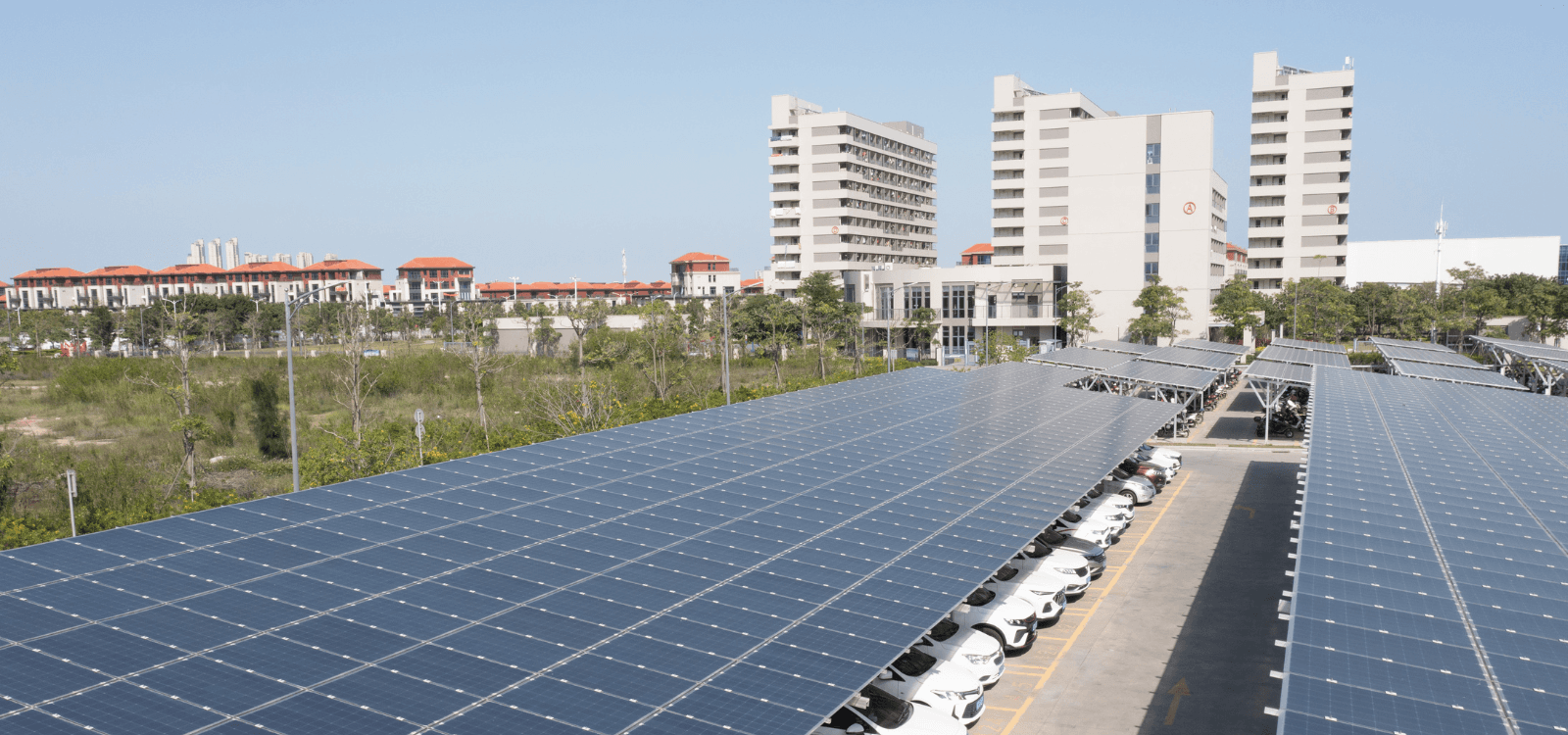
South Korea now requires all public parking lots with 80+ spaces to install solar canopies, turning everyday infrastructure into power generators. The policy could add 3 GW of new solar by 2030, showing how urban spaces can double as clean energy hubs without using new land.
South Korea is about to do something remarkable: turn thousands of parking lots into clean-energy generators.
Starting this year, all public parking lots with more than 80 spaces, whether newly built or existing, must install solar canopies or carports. The goal is to tap an enormous underused surface area for power generation while keeping cars shaded and cool.
The government expects these installations to add nearly 3 gigawatts of new solar capacity by 2030, supporting the country’s broader push toward carbon neutrality.
Parking lots take up vast stretches of urban space. Under the new policy, they’ll now serve double duty, housing vehicles and producing electricity.
Solar canopies don’t just generate clean energy. They make daily life better: cars stay cooler in summer, and the panels shield against sun, rain, and hail. They also help cool cities by reducing the urban heat island effect, instead of pavement radiating heat, solar panels absorb the sunlight and convert it into power.
To speed things up, South Korea is pairing the rule with incentives, low-interest loans, and expedited permitting. Pilot projects in Seoul, Daejeon, and Busan already show strong public support and clear financial benefits for both municipalities and lot owners.
The government’s broader solar roadmap aims to add 55 GW of total solar capacity by 2030, with parking lots playing a visible, community-level role in that growth.
We’ve seen glimpses of this stateside:
- ●Arizona’s Northwest Fire District added solar carports across 12 lots, generating more than 1 million kWh a year.
- ●Rutgers University built a 28-acre solar canopy system, powering thousands of homes.
- ●New York City’s “City of Yes” plan opened 8,500 acres of parking lots for solar and EV charging infrastructure.
- ●A Michigan Tech study found that a typical Walmart Supercenter parking lot could host up to 3 MW of solar power — enough to run 100 EV chargers if fully covered.
States like Texas, Florida, and New Mexico could follow suit, unlocking thousands of school, municipal, and retail lots as clean-energy sites.
Parking lots have always been blank asphalt canvases. South Korea just proved they can be part of the clean-energy grid — without taking new land or disrupting daily life.
If they can turn every major parking lot into a power plant, what’s stopping us?
https://electrek.co/2025/11/02/new-national-law-will-turn-large-parking-lots-into-solar-power-farms/
Ready to Discuss Your Project?
Get your instant estimate or talk to our team about your legacy solar project.


