

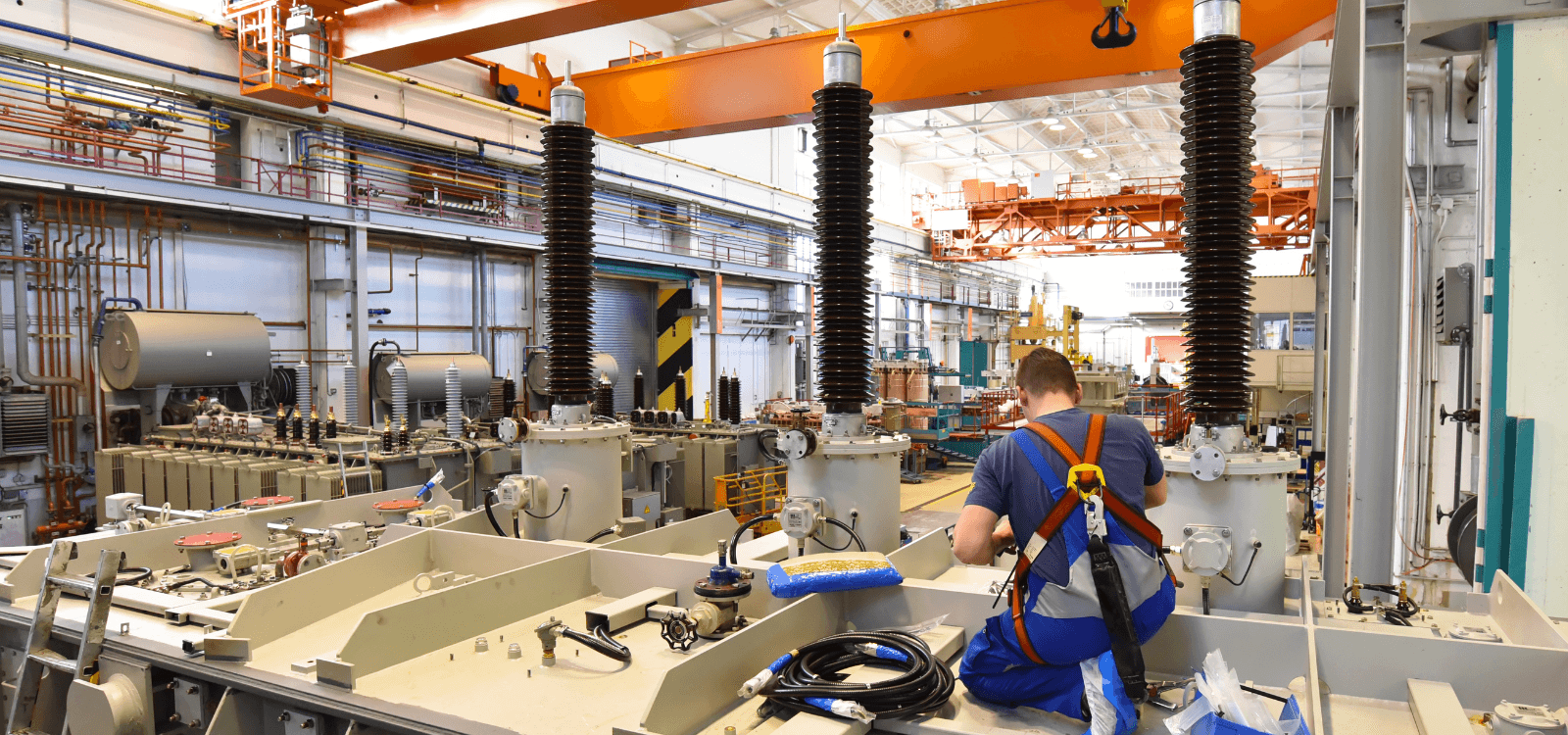
Transformer shortages are emerging as a major bottleneck for the energy transition, with lead times stretching up to five years and costs rising sharply. As demand from renewables, electrification, and data centers grows, the pace of grid expansion is now limited by how fast this critical equipment can be manufactured.
The Energy Transition Is Running Into a Transformer Bottleneck
The energy transition is hitting a physical constraint: transformers.
Large power transformers are essential for stepping electricity up or down in voltage so power plants, solar farms, batteries, and data centers can connect to the grid. Without them, new generation cannot be delivered and new demand cannot be served.
Lead Times and Costs Are Rising
According to BloombergNEF, lead times for large transformers (100 MVA and above) have more than doubled since before the pandemic. What once took around two years can now take as long as five.
Costs have moved in the same direction. Units that cost $1.5–2 million before 2020 now run $2.5–3.5 million or more, an increase of roughly 75–80%, not including the cost of delays.
These are not marginal components. They are critical path infrastructure.
Demand Is Accelerating From All Sides
Transformer demand is rising quickly across the energy system. Renewable energy projects need them to connect generation. Electrification of transport and industry adds new load. Data centers, particularly those tied to AI, are driving large-scale power demand in concentrated areas.
All of this requires grid expansion.
Bruno Melles, managing director for transformers at Hitachi Energy, described the current moment as a “manufacturing supercycle,” where demand remains high and production struggles to keep pace.
Why Supply Cannot Catch Up Quickly
Scaling transformer production is not fast.
Large transformers are complex and often custom-built. Manufacturing capacity cannot be added overnight. Equipment for new transformer factories can take two to four years to procure. The supply of grain-oriented electrical steel, a key material used in transformer cores, is also constrained.
Investment Is Increasing, Slowly
Hitachi Energy has committed $1.5 billion to expand transformer production as part of a broader $9 billion investment in manufacturing, engineering capacity, and research.
Globally, grid investment is rising after a long period of underinvestment. BloombergNEF estimates grid spending reached more than $470 billion in 2025, up 16% after a 15% increase in 2024. It is expected to exceed $500 billion in 2026 as countries expand transmission networks and connect new generation.
The challenge is timing. Demand is accelerating now. Manufacturing capacity expands over years.
Companies Are Moving Upstream
Some developers are responding by securing supply directly. Solar developer Sunotec acquired a majority stake in German substation builder Kaufmann Electric GmbH to speed up grid connections. Indian manufacturer Waaree Energies acquired a controlling stake in transformer producer Kotsons, now renamed Waaree Transpower, to support its renewable pipeline.
These moves reflect a shift. Grid equipment is no longer just a procurement item. It is becoming a strategic constraint.
Policy vs. Physical Reality
Grid operators are working to speed up project approvals. PJM’s expedited interconnection track is one example of efforts to move projects through queues faster.
But faster approvals do not produce transformers.
There is a growing gap between policy timelines and physical infrastructure. Projects can be permitted, financed, and ready to build, but still delayed by the availability of key equipment.
The Limiting Factor
The pace of the energy transition will not be set only by policy or capital. It will be determined by how quickly the industry can manufacture and deploy the physical components required to connect generation and load.
Right now, transformers are one of those limiting factors.
Ready to Discuss Your Project?
Get your instant estimate or talk to our team about your legacy solar project.


