

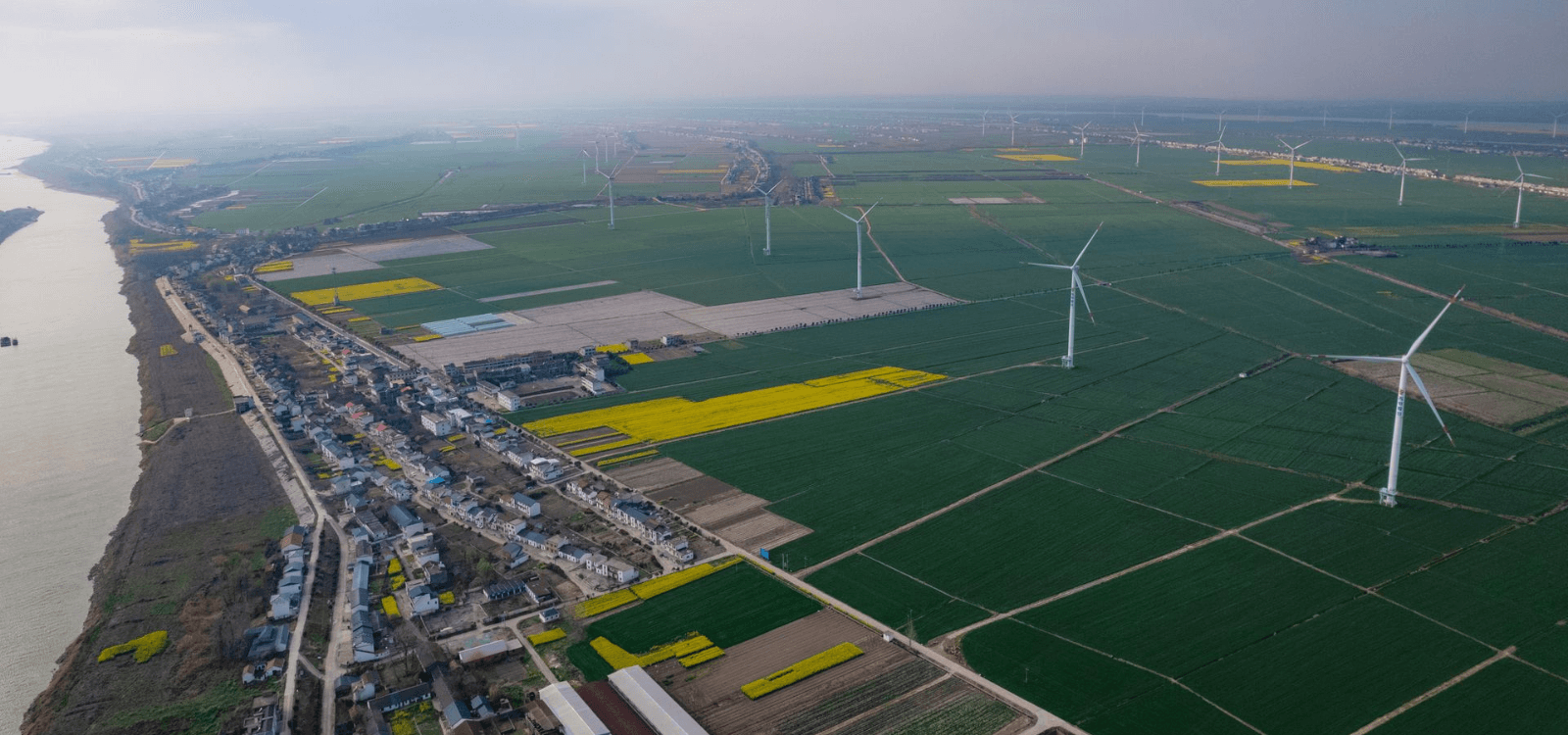
The U.S. and China are taking sharply different paths on energy infrastructure, and the gap is becoming impossible to ignore. China is building wind, transmission, and generation at unprecedented speed through centralized planning, while the U.S. struggles with long permitting timelines just as electricity demand surges from AI and electrification. The contrast highlights how execution capacity, not ambition, is defining energy leadership.
The world's two biggest emitters are taking very different approaches to energy infrastructure.The world's two biggest emitters are taking very different approaches to energy infrastructure.
That contrast was impossible to miss at Davos.
President Trump dismissed wind power, talked up fossil fuels, and claimed China "makes the windmills" but doesn't use them. China's vice premier positioned China as the leader in green development and invited international partnerships.
The data tells a different story.
China installed 561.5 GW of wind capacity by the end of 2024, nearly 46% of global capacity. The U.S. has 155 GW. In 2024, China added 80-87 GW of new wind. The U.S. added 4.1 GW, its slowest growth in a decade.
Those Chinese turbines generated 997 TWh in 2024, meeting 10% of China's electricity demand. The claim that they don't use their own wind power is false.
What explains the speed difference? Structure.
China operates through centralized planning. The National Energy Administration sets mandates. State banks provide below-market capital. Ultra-high voltage lines connect remote wind bases directly to industrial centers. Permitting takes 1-3 years.
The U.S. operates through federalism and markets. Transmission requires navigating multiple states, environmental reviews, and land disputes. In 2024, the U.S. completed only 322 miles of new high-voltage transmission despite desperate need. Permitting takes 7-15 years.
Both approaches have serious costs.
China's speed created overcapacity. Solar manufacturing capacity hit 1.8 TW in 2025, five times global demand of 350 GW. This crashed prices but pushed manufacturers into losses. State enterprises carry massive debt. China also approved 340 GW of new coal from 2021-2025, risking $490 billion in stranded assets.
The U.S. system is efficient per project, but can't keep pace with demand growth. After two decades of flat consumption, electricity demand is surging. Data centers consumed 4.4% of U.S. power in 2023. By 2028, that hits 12%. S&P Global estimates data centers will need 44 GW by 2028, but the grid will likely provide only 25 GW. A 19 GW shortfall.
Tech companies build in months. Utilities operate in years. That mismatch is driving companies toward states like Texas, where they can bypass permitting bottlenecks.
The reality: execution capacity defines energy leadership.
China can build at an unprecedented speed, but with unsustainable debt and the risk of stranded assets. The U.S. has innovation, capital, and resources, but infrastructure takes a decade to permit while demand continues to escalate.
With the rise of AI, reshoring, and electrification, we are witnessing the first significant demand increase in two decades, highlighting a clear challenge ahead.
For the U.S., it's structural reform. For China, it's economic sustainability. Both paths carry serious risk, but the cost of inaction is losing competitive advantage in the most energy-intensive era of modern history.
https://www.utilitydive.com/news/pjm-board-backstop-auction-data-center-interconnection/809967/
Ready to Discuss Your Project?
Get your instant estimate or talk to our team about your legacy solar project.


