

New Jersey approved 16 agrivoltaics projects totaling 52.06 MW. What the dual-use solar pilot requires, what it pays, and what it means for farmland.
New Jersey just decided which farms will host its first generation of dual-use solar. The Board of Public Utilities approved 16 agrivoltaics pilot projects totaling 52.06 MW, spread across working farms in eight counties.
For a landowner, the headline number matters less than what sits behind it: a state program that pays a premium for solar designed to work around crops and livestock instead of replacing them.
Here is what the approval actually covers, what the program requires of the people running these projects, and what it signals for anyone weighing solar on productive ground in New Jersey.
What Did New Jersey Just Approve?
The New Jersey Board of Public Utilities approved 16 agrivoltaics pilot projects totaling 52.06 MW, sited on farms in Atlantic, Cumberland, Gloucester, Hunterdon, Mercer, Monmouth, Salem, and Warren Counties. Each project pairs solar generation with active farming — soybeans, hay, grains, vegetables, fruits, livestock, or some combination.
The approvals came through New Jersey's Dual-Use Solar Energy Pilot Program, created under the Dual-Use Solar Energy Act of 2021. The pilot exists to answer a specific question: can a farm keep producing food while generating solar power on the same acreage?
The results will shape a permanent statewide agrivoltaics program, which makes these 16 projects less a rollout than a test bed.
What Is Agrivoltaics, and How Is It Different From Farmland Solar?
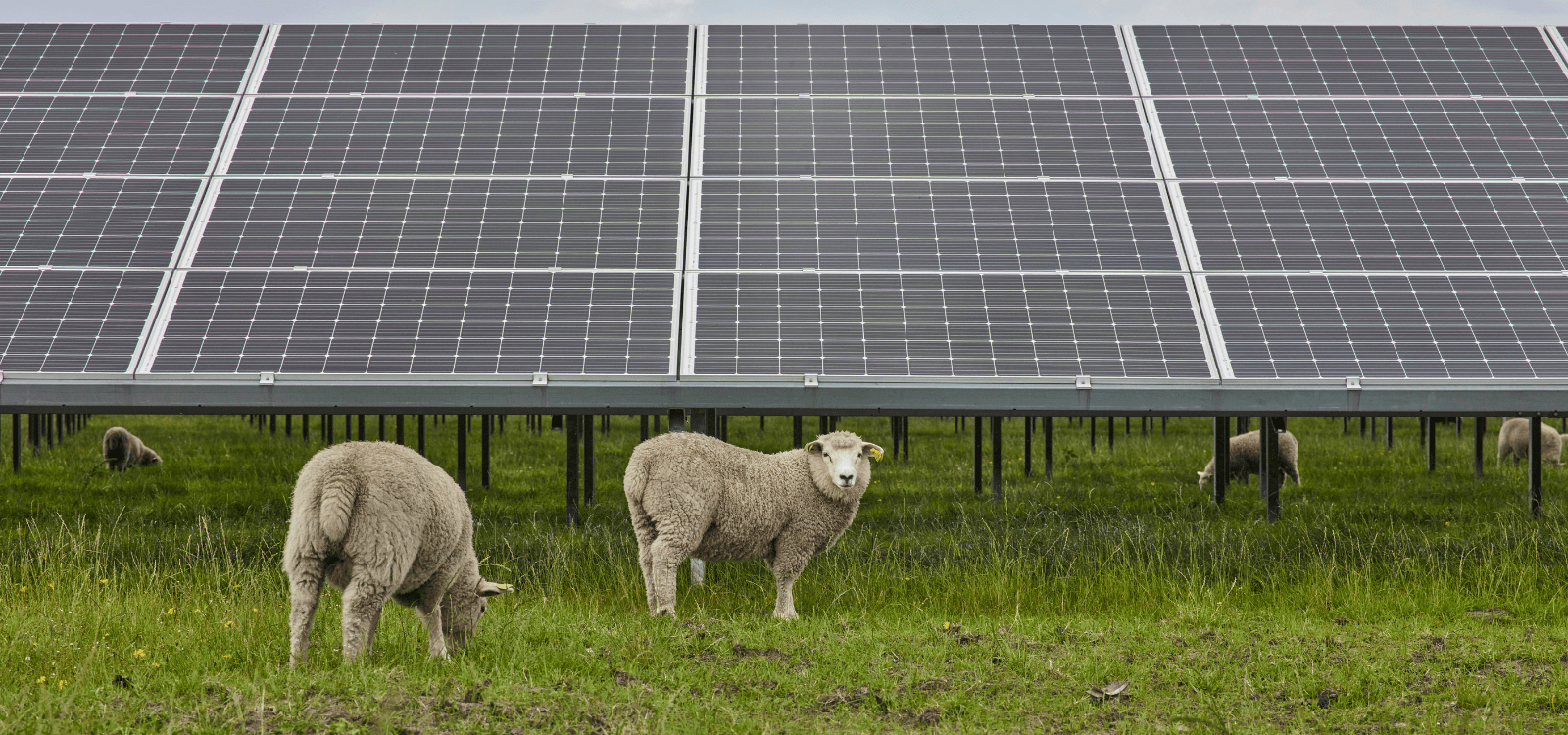
Agrivoltaics — also called dual-use solar — places panels above or around working farmland so the land continues producing crops or supporting livestock while generating electricity. The panels are elevated, spaced, or arranged so that farm equipment, growth, and grazing still work underneath and between them.
That is a meaningful distinction from conventional ground-mount solar on farmland, where the land is generally taken out of agricultural production for the life of the system. The debate over that trade-off has been loud in the Northeast for years, and the evidence is more nuanced than the headlines suggest — Cornell research on farmers who lease land for solar found they are three times more likely to reinvest in their operations.
New Jersey is not the first state to test the dual-use model. New York's first agrivoltaics project came online in 2025 and demonstrated that solar and farming can share a footprint. New Jersey's pilot is an attempt to do it at program scale, with rules attached.
What Does New Jersey's Dual-Use Pilot Require?
Three requirements separate these projects from ordinary farmland solar:
- ●A three-party structure. Every project must include a landowner, an active farmer, and a solar operator. No project qualifies with the farmer sitting on the sidelines.
- ●Continued production. The farm has to stay in active agricultural or horticultural production. Generating electricity is an addition to the operation, not a replacement for it.
- ●A meaningful farmer role. The farmer must participate in planning and operating the project. In practice, that forces the array design to work around real farm operations — leaving clearance for hay to grow, or room for livestock to graze beneath the panels.
That last requirement is the one that changes engineering decisions. Racking heights, row spacing, and equipment access all get set by what the farm needs, not only by what maximizes production per acre.
How Do Dual-Use Projects Get Paid?
Qualifying projects can receive an agrivoltaics adder — an additional incentive intended to cover the extra cost of designing and operating solar around crops or livestock. Building higher and wider costs more than building dense, and the adder is the state's acknowledgment of that gap.
Projects earn the incentive through New Jersey's Successor Solar Incentive Program, known as SuSI. For every megawatt-hour an eligible project generates, it earns an SREC-II. Dual-use projects can receive a higher SREC-II value that includes the agrivoltaics adder, with incentives available for up to 15 years as long as program requirements continue to be met.
The phrase "while program requirements are met" carries real weight over a 15-year term. If the farm stops farming, the economics that justified the project change. That is a compliance obligation attached to the revenue stream, and it belongs in the underwriting from day one.
How Big Can the Pilot Get?
The pilot can support up to 200 MW over three years, with individual projects generally capped at 10 MW. The 52.06 MW approved here represents roughly a quarter of that ceiling.
Interest ran well ahead of capacity. The first solicitation attracted 33 proposals totaling about 140 MW, and only 16 made it through. That ratio is the most useful signal in the announcement: demand for dual-use development in New Jersey substantially exceeds what the pilot can currently absorb.
New Jersey has been running this pattern across its solar programs. The state also approved a 3,000 MW community solar expansion earlier this year, the largest in its history. Dual-use is a smaller, more targeted piece of the same push to add generation without adding land-use conflict.
What Does This Mean for Landowners and Existing Solar Owners?
For farm owners who did not make this round, the pilot is a preview rather than a closed door. The results of these 16 projects will inform the permanent program, and the oversubscribed first solicitation suggests future rounds will be competitive on design quality, not just interest.
For owners of existing solar assets in New Jersey, the more relevant point is what the incentive structure reveals. The state is paying a premium for projects that keep land productive and are built to be operated actively over a long horizon. That is the same logic that drives value in the secondary market for aging solar systems: an array that is maintained, documented, and still producing is worth considerably more than one that has been left alone.
If you already own a commercial system in the state, the practical questions are unchanged by this announcement — but the market context around them keeps improving. New Jersey's solar policy environment has been steadily more favorable to owners and operators, which is worth understanding before making a decision about an existing asset. Our New Jersey solar overview covers the state-level picture.
Start With What Your Project Is Worth
These 16 projects will show whether farms can keep producing food, give farmers another source of income, and add electricity to the grid without taking working farmland out of production. That is a genuinely useful experiment, and the answer will shape how much dual-use solar New Jersey builds over the next decade.
If you already own a commercial solar system — dual-use or conventional — the more immediate question is what it is currently worth and whether it is still earning what it should. You can get a ballpark estimate for your project in a few minutes, without a sales call.
Source: New Jersey greenlights 16 agrivoltaics projects on local farms, Solar Power World.
Ready to Discuss Your Project?
Get your instant estimate or talk to our team about your legacy solar project.


