

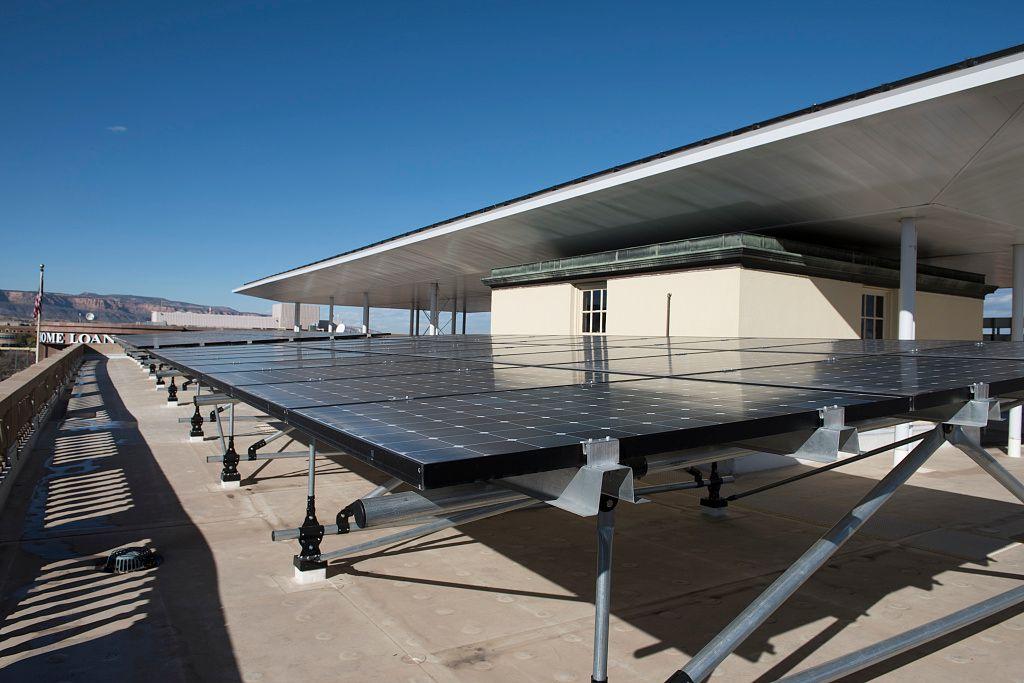
Your roof is wearing out under your solar. How to remove and reinstall the panels, keep the roof warranty, and when selling the project makes more sense.
When the roof under a commercial solar project needs replacing, the panels have to move before the roofer can work, and every panel that comes off earns nothing until it goes back on. Before you start, find out who owns the panels, what your agreements say about roof work, and whether the project is worth putting back at all. For many aging projects, selling before the roof work is the simpler path.
The question usually arrives late. A landlord ready to sign a new deal stopped to ask what it would cost to take the solar off and put it back if they reroofed under it. A large portfolio owner was weighing a new roof against extending the contracts on a group of aging rooftop projects. Neither had a number, and neither had planned for it when the panels went up.
The Panels Are Often Protecting the Roof
The roof under the panels usually ages slower than the roof around them.
Panels shade the roof. The sunlight and UV that would have baked the roof land on the panels instead, and a 2023 study by Brian Whelan and Rocco Gerhardt, published by the roofing consultants' institute IIBEC, measured the membrane under an array running about 20°F cooler at the hottest part of the day. Less heat and less UV mean less cracking and drying out over time.
Even so, most commercial roofs don't last as long as the solar on top of them. We plan on about 15 years for a commercial roof, while the U.S. Department of Energy puts the life of solar panels at 20 to 30 years. Many projects built in the late 2000s and early 2010s went onto roofs that were already a few years old, and those roofs are reaching the end now.
How Long Your Roof Lasts Depends on More Than Its Age
Two roofs installed the same year can need replacing years apart.
- ●What it's made of. TPO, EPDM, PVC, modified bitumen, built-up and metal roofs all age differently.
- ●How new it was when the solar went on. A roof that was already ten years old on day one has less time left than the panels.
- ●Where the building is. A roof near the coast, in the city or out by farm fields wears differently. Dirt and soiling, extreme heat, storms and hail, and the weight and melt of snow each take their toll.
- ●How the panels are held down. Racking bolted through the roof adds penetrations, and every one is a spot that can leak as it ages. Ballasted racking avoids penetrations but sits on the roof under weights, adding load and pressing into the insulation.
- ●The load on the roof. Panels, racking, ballast and snow all add weight, and an older building may have less room to spare.
- ●Divots and low spots. Dips in the roof, often under ballast or where people walk, hold water, and standing water shortens a roof's life.
Your Agreements Decide Who Pays
The contracts around the project usually say who pays to move the solar, and what happens to the income while it's off.
If you own both the building and the solar, both bills are yours. If a solar company or investor owns the panels, the site lease or PPA usually says who pays to remove and reinstall them, how much notice the other side gets, and whether anyone owes for the power, credits or rent lost while the panels are down. Some agreements put the cost on the building owner and some on the solar owner.
It isn't only the PPA. A project may also sell power through net metering, serve community solar subscribers or earn incentive certificates, and each of those can have rules about downtime and changes to the system. If you're not sure who owns the panels, our post on who owns the solar on a building you bought walks through how to find out. For what the agreements mean for you, talk to your attorney.
If a third party owns the solar, you want to be on the same side. The building owner and the solar owner should hire and manage the roofer together, with one plan and one schedule, rather than each fighting over the other's crew.
Your Options
1. Sell the Project to Do Good Energy
Best when: the roof needs work and you'd rather not manage a solar crew, a roofing crew and months of lost income.
Do Good Energy buys aging commercial solar, working or not, including projects sitting on roofs that need replacing. We don't pay for the new roof, but once the project is ours, the solar side is ours too: we work with you and your roofer to move the panels around the work, and we take over the operations, maintenance, insurance and every agreement that comes with the project.
- ●A number in 23 seconds. Our instant solar estimate asks six quick questions, with no paperwork and no commitment.
- ●A letter of intent right away. If the number looks good, you can sign a letter of intent on the spot.
- ●Missing paperwork is fine. We've bought projects that changed hands three to five times.
Here's how selling to us works, and how buyers work out what an old commercial solar project is worth.
2. Patch or Recover the Roof
Best when: the roof still has a sound base and the solar has years left.
Not every worn roof needs a full tear-off. A roofer may be able to patch the problem areas or put a new layer over the old roof, with a coating, a liquid-applied membrane or a recover system. Many of these come with their own manufacturer warranty, and some can be done around the racking with fewer panels moved. Ask your roofer what your roof can take and what warranty comes with each option.
3. Reroof in Sections and Reinstall the Panels
Best when: the roof needs replacing and the project has years of contracted income left.
Depending on your roof and how the building is built, the array can be taken apart in pieces or shifted over, so the whole project never comes off at once. A common way to do it:
- ●remove the first third of the array, and keep only that much off the roof
- ●the roofer replaces the roof under it
- ●reinstall those panels, then shift the second third over onto the new roof, and so on
How many sections you need depends on the size of the roof and where the penetrations are. The rest of the project keeps producing while one section is down.
Every step is done by licensed professionals: a roof and structural assessment, permits, notice to the utility where required, and a solar crew to disconnect, remove, reinstall, test and restart each section. Never disconnect or move any of the equipment yourself. The wiring can carry electricity even when the project seems to be off.
4. Remove the Panels for Good
Best when: nothing else works.
This is the worst option. You pay for the removal, give up the remaining income, and the panels need to be recycled rather than thrown away. If a third party owns the panels, the agreement may put the removal cost on them. Our post on what happens when a solar PPA ends covers removal clauses in more detail.
Get the Roof Warranty to Cover the Solar
The company that warrants your roof has to know the solar is there.
Talk to both the solar company and the roofer about a roof warranty that covers the roof with the solar on top. The warranty holder, whether that's Johns Manville, Firestone or whoever made the roof, must be told about the solar, and most have their own forms for it. On one project we saw, the roofer provided a warranty plus a letter confirming the new roof was compatible with the array.
What Drives the Cost
Quotes vary widely, so get them from both trades before you decide.
- ●The size of the project and the roof. More panels mean more labor on both ends.
- ●How the panels are attached. Ballasted racking comes off differently from racking bolted through the roof, and every penetration has to be flashed again.
- ●Breakage. Panels are most at risk of breaking when they're being removed and reinstalled. Expect some to crack, and budget for replacements.
- ●Storage. Ask whether you have space on site to store the panels safely. If not, they have to be trucked away and back.
- ●Parts that are no longer made. On an older project, a broken panel or a failed inverter may have no exact replacement, and a different model can mean new permits or utility approval.
- ●Lost income. While panels are off, they make no power, earn no incentive certificates and may collect no contract payments or credits.
Time It Around the Seasons, Your Contracts and Your Incentives
Reroof in spring or fall, and never a year before the panels come off for good.
The shoulder seasons are the best time for the work. The panels aren't making their most power, so less income is lost, and the roof is safer for the crews than in summer heat or winter ice.
Line up the roof work with your contract and incentive end dates too. In New Jersey, for example, SREC payments run for 10 or 15 years. Doing the roof right before the income ends can mean paying to reinstall a project you're about to take down. Our state-by-state solar guide covers the rules where your project is.
If you do reinstall, choose a roof built to outlast the time the panels have left, so you only do this once.
Own an existing commercial solar system? The solar guide answers the ones every owner has, state by state.
Ready to Discuss Your Project?
Get your instant estimate or talk to our team about your legacy solar project.


