

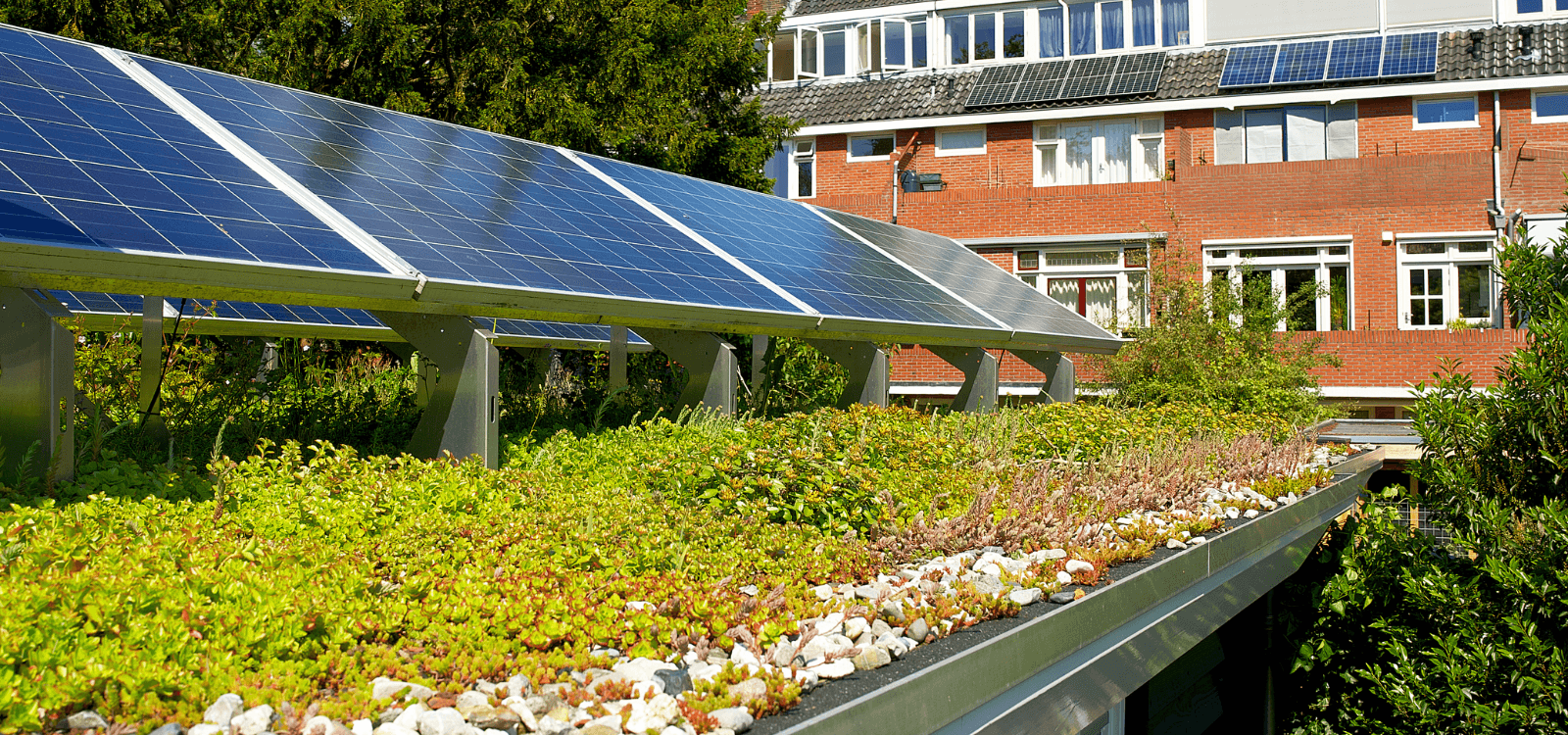
A biosolar roof — solar panels over a living green roof — produced 11.1% more power on average and 23.25% more during extreme heat.
Rooftop solar loses output exactly when the grid needs it most: on the hottest days of the year. A study out of Australia suggests part of the fix may be sitting under the panels rather than inside them.
Researchers at the University of Technology Sydney (UTS) found that a “biosolar” roof — solar panels mounted above a living green roof — produced 11.1% more electricity on average than a conventional rooftop solar system, with gains reaching 23.25% during extreme heat. The plants cool the roof, and cooler panels produce more power.
The comparison ran through Australia’s 2025 summer, with UTS working alongside the Bradfield Development Authority (BDA). It is one real-world project, not a universal rule. But the mechanism behind it — heat suppressing panel efficiency — is already at work on every rooftop array in service today.
What Is a Biosolar Roof?
A biosolar roof combines solar panels with a living green roof, placing the panels above vegetation so both can benefit from the same rooftop space. Instead of treating generation and greenery as competing uses for a roof, it stacks them.
The UTS system paired 319 north-facing solar panels with more than 14,000 native plants across a 1,300-square-meter rooftop. (In the Southern Hemisphere, north-facing arrays are the equivalent of south-facing arrays in the United States.)
For years, green roofs and rooftop solar have been pitched to building owners as separate sustainability line items, each competing for the same square footage and the same budget. This research points the other direction.
Why Does Heat Reduce Solar Panel Output?
Solar panels operate most efficiently near 77°F (25°C), and efficiency can drop by up to 2% for every degree above that threshold. That is a material loss on a commercial rooftop, where dark membrane and metal decking push module temperatures well above the air temperature on a summer afternoon.
This is the same physics that makes cold climates surprisingly productive for solar. Low ambient temperatures are part of why solar performs well at high latitudes, even with less sunlight to work with.
The biosolar roof attacks the problem from underneath. Plants release water vapor through evapotranspiration, which pulls heat out of the surrounding air and creates a cooler rooftop microclimate for the panels sitting above them.
How Much Did the Cooling Actually Add?
Across the season, the biosolar array produced 11.1% more electricity than the conventional rooftop system. The peak gain of 23.25% came during extreme heat.
That pattern matters more than the headline number. Researchers found the hotter the day became, the more effective the cooling effect was — meaning the benefit scales up precisely when panel losses are worst and when grid demand, and the value of a delivered kilowatt-hour, tend to peak.
What Else Does a Green Roof Under the Panels Do?
The generation gain was one result among several the researchers measured:
- ●Surface temperature. The biosolar roof stayed up to 28°C (roughly 50°F) cooler than a conventional aluminum roof, which reduces heat load on the building below.
- ●Stormwater. It retained an average of 73% of rainfall, cutting the volume running off the roof and into drainage.
- ●Filtration. The system acted as a natural filter, removing more than 90% of key air and water pollutants measured.
- ●Biodiversity. It supported 39 species of birds, insects, mammals, and gastropods on a single commercial rooftop.
For a building owner, several of those are line items that normally get paid for separately — stormwater management, roof heat load, sustainability reporting — delivered by the same square meters carrying the array.
Will Every Roof See a 23% Gain?
No, and the researchers are direct about that. This was one project in one climate, and the exact performance gains will not look the same on every roof.
Results depend on climate, plant selection, irrigation, panel mounting height, and roof design. A biosolar roof also carries obligations a bare membrane does not — structural load, an irrigation strategy, and ongoing vegetation maintenance — which belong in the analysis alongside the production upside.
The honest read is that biosolar is a promising design approach with one strong real-world data set behind it, not a settled retrofit product with a predictable payback.
What Does This Mean for an Existing Rooftop System?
Most commercial owners are not building a new roof this year. They are living with an array that was installed years ago and has been quietly losing output to heat every summer since.
That loss is invisible without data. The broader shift in the industry is toward getting more from assets that already exist rather than only adding new capacity — performance optimization on installed systems is where a growing share of the available upside now sits. Detecting it is increasingly practical, too: researchers have shown that system underperformance can be identified from AC-side inverter data alone, without new sensors on the roof.
If you do not know what your system produced last August, that is the first gap to close — before any conversation about green roofs, repowering, or replacement.
Where Does Biosolar Go From Here?
Bradfield City is now requiring green or biosolar roofs across 80% of suitable roof space, which turns a research finding into a design standard for an entire development. As Peter Irga, one of the researchers behind the project, framed it, the question is no longer whether biosolar works, but how quickly it can become the new standard.
The full study results are covered in pv magazine’s report on the UTS biosolar comparison.
Start With What Your Roof Is Producing Today
Cooler panels produce more power. So do clean panels, working inverters, and a system somebody is actually watching. Before evaluating any upgrade, an owner needs a baseline: what the array is generating now versus what it should be generating.
If your rooftop system is aging, underperforming, or simply unaccounted for, it is worth knowing what your project may be worth as it stands — and what a second life on that roof could look like.
Ready to Discuss Your Project?
Get your instant estimate or talk to our team about your legacy solar project.


