

Kazakhstan solar growth, an IRENA funding call, and Ohio repowering grants show renewable energy progress runs on policy, capital, and aging equipment.
Three energy stories landed in the same week from three places with almost nothing in common: Kazakhstan, the Caribbean, and a set of public airports in Ohio.
None of them is a breakthrough announcement. One is a policy structure that has been compounding quietly for over a decade, one is a funding pipeline for projects that stalled before construction, and one is a small grant program to replace equipment that has been running too long.
Taken together they are a useful reminder that renewable energy progress does not arrive through a single strategy. It shows up as policy, as financing, and as the unglamorous work of dealing with aging assets already in service.
What Is Driving Kazakhstan's Renewable Energy Growth?
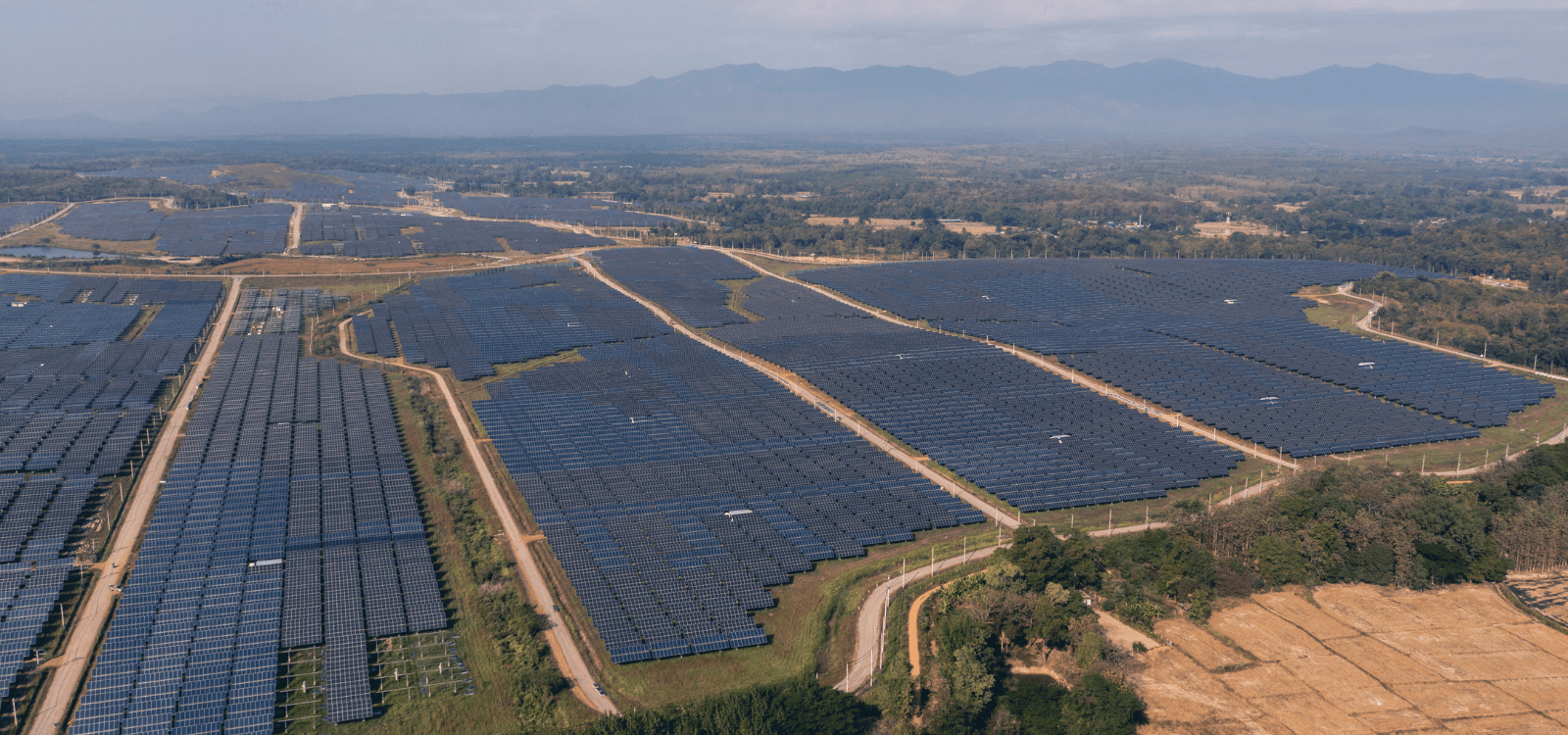
Kazakhstan's solar capacity has passed 1.37 GW across 52 operating utility-scale plants, and renewables now supply about 7% of the country's electricity, up from 4.53% in 2022. Total renewable capacity has climbed above 3.7 GW across 169 facilities, including solar, wind, hydro, and biogas.
In generation terms, renewables produced 5.11 billion kWh in 2022. By the end of 2025 that had reached 8.6 billion kWh, exceeding the country's own target of increasing renewable generation by 1.5 times.
What makes the case interesting is not the size of the numbers. It is that the growth traces back to a sequence of policy decisions that stayed in place long enough to matter, according to pv magazine:
- ●2014 — Fixed tariffs. Kazakhstan introduced fixed tariffs for renewable projects, giving early developers a predictable price.
- ●2018 — Competitive auctions. The country shifted to auctions paired with guaranteed 20-year electricity purchases, which pushed prices down without removing revenue certainty.
- ●Since then — nearly 6.9 GW procured. That is roughly double the capacity currently operating, meaning the pipeline is still working through what the auctions awarded.
- ●This year — 245 MW across 10 projects. Five solar, four wind, and one hydroelectric project are planned for commissioning.
The lesson for asset owners anywhere is about the shape of the contract, not the flag on the building. A 20-year purchase agreement is what makes a project financeable — and it is also a clock. Markets built on long fixed-price contracts eventually reach the far end of them, which is exactly what is happening now to Japan's fleet of feed-in-tariff-era solar assets.
How Does IRENA's Funding Call Work in Central America and the Caribbean?
The International Renewable Energy Agency has opened a call for renewable energy projects in Central America and the Caribbean that need financial or technical support to move toward construction. Projects are routed through one of two tracks depending on how far along they already are.
- ●Climate Investment Platform (CIP). For projects that have reached the pre-feasibility stage and need help getting further.
- ●Energy Transition Finance Accelerator (ETAF). For more mature projects that are ready to access financing.
The call covers both grid-connected and off-grid renewable energy projects, along with electric mobility, green industrialization, and renewable energy supply chains. Eligible technologies include solar PV, solar thermal, onshore and offshore wind, hydropower, geothermal, bioenergy, green hydrogen, clean transport, and even energy production from sargassum, the seaweed that piles up on Caribbean beaches.
The structure of the IRENA call is the part worth noticing. It sorts projects by maturity rather than by technology, because the thing standing between a planned project and a built one is usually not engineering. It is capital and paperwork at a specific stage.
What Is Ohio Funding at Its Airports?
Ohio's Environmental Protection Agency has opened a $2 million grant program to help public airports replace or repower aging diesel ground support equipment with cleaner alternatives. The program covers 26 eligible counties, with the goal of improving air quality, reducing nitrogen oxide emissions, and modernizing airport infrastructure.
The money has a specific origin. It comes from Ohio's share of the Volkswagen Diesel Mitigation Trust, created after Volkswagen admitted to using illegal emissions-control devices in certain diesel vehicles. Over the past decade Ohio has received about $65 million through that settlement, directed toward projects that cut diesel emissions through cleaner transportation technology.
Note the word the program uses: repower. In the fleet world it means keeping the vehicle and replacing the engine that has aged out of usefulness. In solar it means keeping the site, the interconnection, and often the racking, and replacing the equipment that has degraded or gone obsolete. Same logic, different asset.
What Do Three Unrelated Programs Have in Common?
Nothing, on the surface. A Central Asian auction regime, a multilateral financing call, and a state grant for airport tugs and baggage loaders do not belong in the same news cycle.
But each one is solving a different bottleneck in the same system:
- ●Policy durability. Kazakhstan's growth came from rules that stayed stable long enough for investors to underwrite 20-year positions.
- ●Project financing. IRENA's call targets projects that already exist on paper and simply cannot reach construction without capital or technical support.
- ●Equipment replacement. Ohio is funding the least visible category of all, which is upgrading infrastructure that is already installed and already running.
Most coverage of the energy transition tracks the first two. The third is where a growing share of the actual work now sits.
Why Does Aging Equipment Count as Progress?
Because the installed base is getting old, and it is getting old everywhere at once. About 86 GW of Europe's wind capacity will be more than 20 years old by 2030, facing an end-of-life decision. In the U.S., solar built during the 2010s boom is reaching the point where panels outlast the inverters underneath them.
An owner in that position faces the same three-way choice Ohio is subsidizing for airport fleets. Keep running degraded equipment and absorb the lost output. Replace it and extend the asset's productive life. Or exit.
What makes the decision hard is rarely the technology. It is that the original installer, lender, or engineer has often moved on, the monitoring login stopped working years ago, and nobody on the property can say with confidence what the system is producing today.
Where Does This Leave a Solar Owner?
New capacity records and international funding calls set the direction of the market, but they do not do much for a system already sitting on a roof or a field. That work is local, specific, and starts with knowing what you actually have.
If you own commercial solar that is a decade or more into its life, the practical first step is a current read on production and condition, followed by an honest number on what the project may be worth today. Whether the answer is repower, hold, or sell, that number is the input every other decision depends on.
Different places, different challenges, different ways of moving the energy transition forward — but at the asset level, it always comes down to the same question about the equipment already in the ground.
Ready to Discuss Your Project?
Get your instant estimate or talk to our team about your legacy solar project.


