

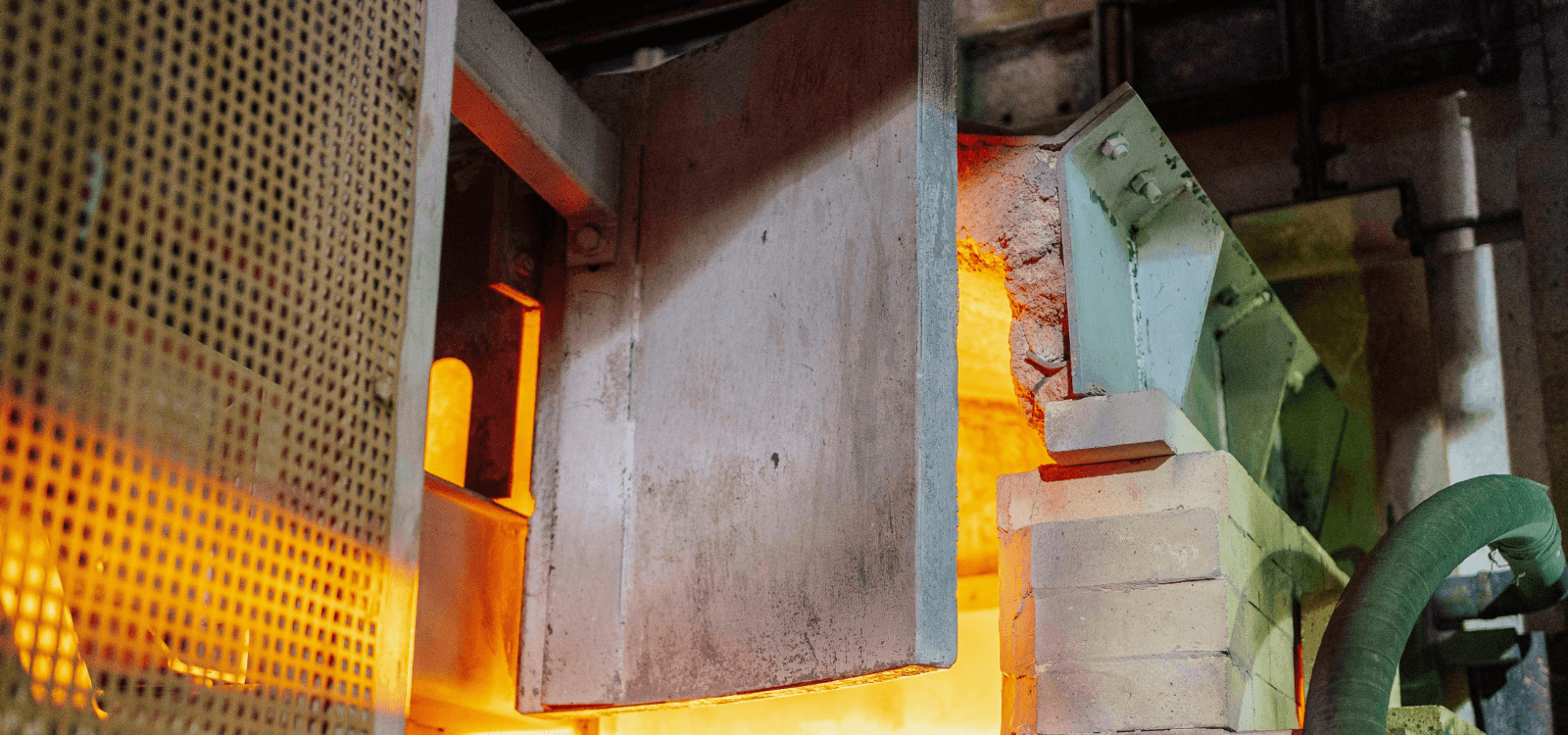
Firebrick thermal batteries store surplus solar and wind as heat up to 1,800°C for steel, cement, and glass. How they work and what they mean for solar.
A firebrick thermal battery stores electricity as high-temperature heat inside specially built bricks, so a factory can run on cheap solar and wind power instead of natural gas. Electrified Thermal Solutions has shown the approach working, storing solar and wind electricity as heat at up to 3,275°F (about 1,800°C).
That matters because the hardest part of cleaning up heavy industry is heat, not electricity. Steel, cement, glass, and chemical plants need temperatures that ordinary electric heating struggles to reach, and they burn fossil fuels to get there.
It is also a story about what to do with surplus power. The midday solar that pushes prices down is exactly what this kind of battery is built to soak up.
What Is a Firebrick Thermal Battery?
Electrified Thermal Solutions calls its product the Joule Hive Thermal Battery (JHTB), also known as the E-brick. It combines traditional firebricks with advanced, electrically conductive firebricks that heat up when electricity passes through them.
The bricks hold that energy as heat. When a factory needs it, air or another gas is blown through channels in the bricks, picks up the heat, and is sent on to furnaces, kilns, or boilers. According to pv magazine, the system stores heat at up to 3,275°F and delivers it from roughly 400°F to 3,275°F.
Why Is Industrial Heat So Hard to Electrify?
Steel, cement, chemicals, and glass can require temperatures above 1,832°F for long periods, and many plants still get that heat from natural gas and other fossil fuels. The U.S. Department of Energy estimates that process heating makes up about 63% of manufacturing energy use, as reported by Triple Pundit.
Switching to electricity is not simple. Conventional electric heating may not reach those temperatures, and large industrial loads can run into grid capacity limits, long connection times, and electricity costs that are higher than natural gas.
How Does a Thermal Battery Use Cheap Solar and Wind Power?
The idea is to convert electricity into heat when power is cheap, store it, and use it later when the factory needs it. The company says the Joule Hive converts and stores electricity as heat at more than 98% efficiency. That figure is the company's own.
The company also says its Texas system charges during very low and negative-price periods, when abundant solar and wind push prices down. The logic will sound familiar to anyone following how batteries earn money in ERCOT, where storage can charge when prices are low and discharge when they are high.
Low-price hours can overlap with periods when grid operators curtail solar and wind because the lines cannot carry everything. A thermal battery gives surplus renewable power a productive use inside a factory instead of leaving it stranded on the grid.
Can the Stored Heat Become Electricity Again?
It can, but that is not the main use case. The stored thermal energy can also run a turbine, so the same approach could generate electricity again when that is the goal. For industrial customers, the heat does not need to be converted back at all and goes straight into the manufacturing process.
Storing heat and later making power is not a new idea. Other thermal storage systems have used materials such as molten salt for that. What sets the Joule Hive apart is its electrically conductive firebricks, which can reach the very high temperatures heavy industry needs.
Is a Firebrick Thermal Battery Running Anywhere Yet?
Yes, at demonstration scale in Texas. Electrified Thermal Solutions commissioned its first 20 MWh commercial-scale system earlier this year at the Southwest Research Institute in San Antonio. One system is a proof point, not a track record.
The wider storage market is moving fast, with a record first quarter for new U.S. energy storage in 2026. Thermal batteries are a different tool from those. They are aimed at heat, which lithium-ion batteries cannot adequately supply for industrial processes, as Triple Pundit notes.
How Could On-Site Solar Feed a Thermal Battery?
The company says the same approach can work with on-site solar. A factory could install more solar than its grid connection would normally support and store the extra generation as heat.
Per pv magazine, the company's CEO describes this as oversizing solar relative to the grid connection and turning the midday surplus into steady, around-the-clock industrial heat. The bricks do not care whether the power comes from the grid, a nearby array, or both.
What Are the Limits of Firebrick Thermal Storage?
- ●One commercial-scale system. The San Antonio installation is an early deployment, so long-term performance and reliability are still to be shown.
- ●Company-reported numbers. The 98% efficiency figure comes from Electrified Thermal Solutions. So does the claim that it can undercut natural gas where delivered gas costs more than about €30/MWh without subsidies, according to pv magazine.
- ●Cost is still a hurdle. Triple Pundit notes that cost remains a general obstacle for thermal storage, even as new cost-effective designs emerge.
What Does This Mean for Commercial Solar Owners? (DGE Take)
Solar is worth the most when its output has somewhere useful to go. Thermal batteries are one new answer, but the question underneath is one every commercial owner faces: when your system produces more than the site uses, what happens to the surplus?
- ●Know your consumption and your solar production. Compare the two hour by hour. The difference is your surplus, and it may be used by the grid or it may simply dissipate and never be used by anyone. If you no longer have monitoring access, that is the first gap to close.
- ●Read your export and contract terms. Some systems are on net metering, which uses the grid like a battery. But how much you export, when you export it, and what the grid values that power at all matter. In some cases a battery, whether a BESS or thermal storage, may be a better use of the surplus. If the paperwork is missing, start with our guide to tracking down your commercial solar contract terms.
- ●Know that usage patterns change over time. A factory that once used a huge amount of energy may have become far more efficient, and a solar system's life is long. A setup that once worked may no longer fit the site's load, but adding a battery could make it work again.
Start With a Ballpark Estimate
Thermal batteries are years from mattering to most commercial rooftops. The more immediate question is whether your own system is still earning its place on the property.
If it is aging, underperforming, or simply unmanaged, a quick read on what your project may be worth is the easiest first step. Enter your ZIP code, project type, system size, and the year it went live.
Source: Storing renewables with firebrick thermal batteries, pv magazine. Additional reporting: Triple Pundit on thermal energy storage and industrial decarbonization.
Ready to Discuss Your Project?
Get your instant estimate or talk to our team about your legacy solar project.


