

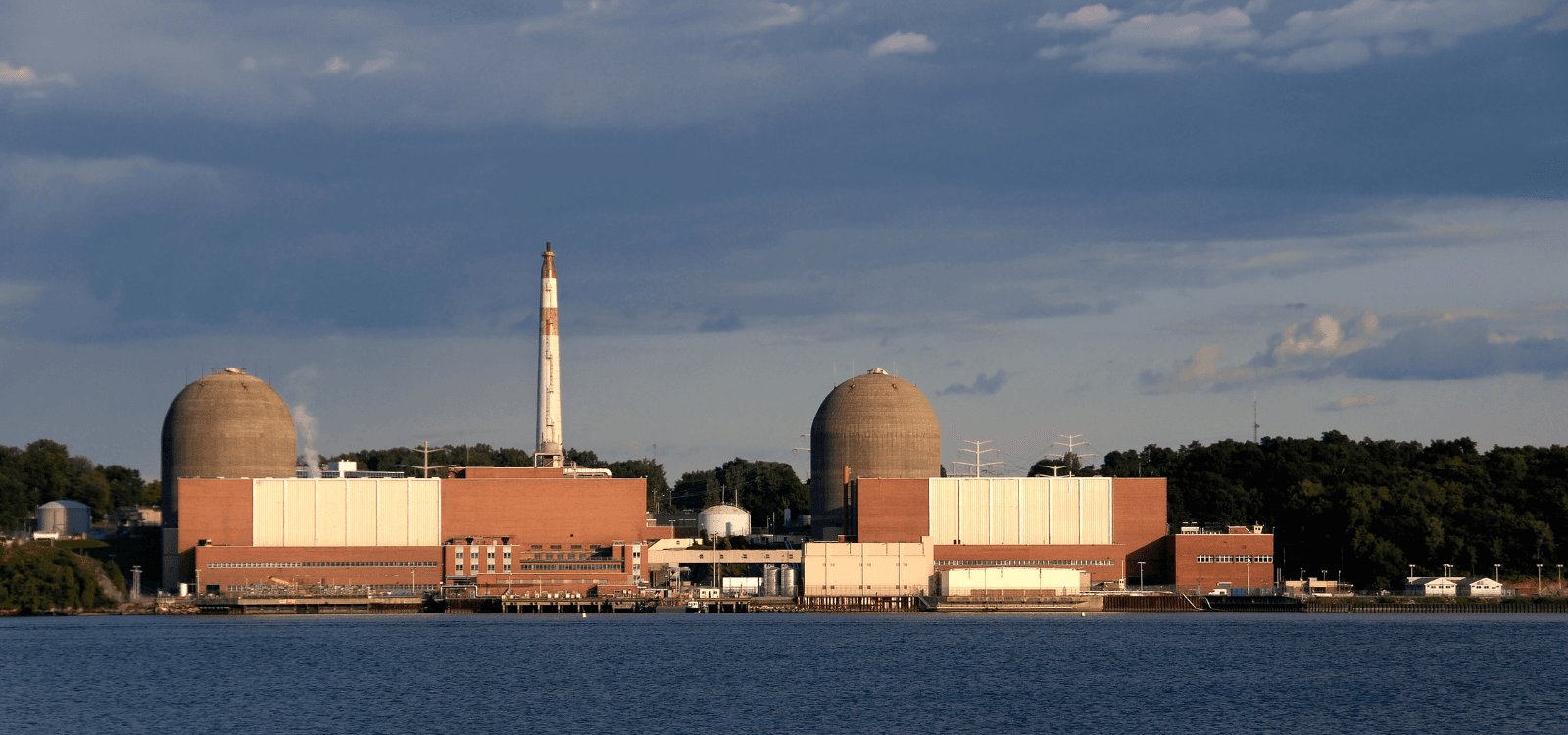
The federal government is pushing to restart the Indian Point nuclear plant, but New York’s governor is holding firm against it. Instead, the state is backing new nuclear development, raising questions about whether the future lies in reviving old plants or building new ones.
Indian Point Restart Debate Highlights a Broader Nuclear Strategy Divide
The federal government wants Indian Point back online. New York Governor Kathy Hochul does not.
The Trump administration has made nuclear expansion a priority, with a goal of significantly increasing U.S. nuclear capacity by 2050. Energy Secretary Chris Wright recently visited the Indian Point site to push for a restart. The plant, located about 25 miles north of New York City, was shut down in 2021 after years of political and regulatory pressure and is now in the process of being decommissioned by its owner, Holtec International.
Any restart would require approvals at both the federal and state levels, including from the U.S. Nuclear Regulatory Commission. Without support from New York State, the effort is unlikely to move forward.
New York’s Position: No Restart, Yes to Nuclear
Governor Hochul’s position is clear. She has rejected reopening Indian Point but continues to support nuclear energy as part of the state’s long-term strategy. Her administration has called for 5 GW of new nuclear capacity in New York and directed the New York Power Authority to develop 1 GW of new emission-free advanced nuclear generation in upstate communities willing to host it.
This approach shifts the focus away from restarting legacy plants and toward building new nuclear capacity designed for current grid needs and regulatory frameworks.
Demand Growth Is Changing the Conversation
The debate comes as U.S. electricity demand begins rising again after decades of relative stability. Growth is being driven by AI data centers, electrification of buildings and transportation, and new industrial loads. That shift is forcing policymakers to reconsider firm, dispatchable power sources, including nuclear.
At the same time, several efforts are underway across the country to restart previously retired reactors. Constellation and NextEra Energy are working to restart Three Mile Island Unit 1 in Pennsylvania. NextEra has also explored restarting the Duane Arnold plant in Iowa. Holtec is pursuing the restart of the Palisades plant in Michigan, which could become the first U.S. reactor to return to licensed operations after decommissioning.
A Strategic Choice, Not a Rejection
New York’s position does not signal a move away from nuclear. It reflects a choice about how that capacity should be built. Restarting Indian Point is not currently part of the plan, but developing new nuclear infrastructure is.
The difference is strategic. One path focuses on extending the life of existing assets. The other prioritizes building new systems in locations aligned with current policy, community acceptance, and grid planning.
What This Means Going Forward
The disagreement over Indian Point highlights a broader question facing U.S. energy policy: Should the next phase of nuclear expansion rely on restarting retired plants or building new ones from the ground up?
New York has made its position clear for now. The state is betting on new development rather than reopening old infrastructure.
Whether that approach proves more effective will depend on how quickly new projects can move from planning to operation, and whether existing assets could have filled the gap in the meantime.
Ready to Discuss Your Project?
Get your instant estimate or talk to our team about your legacy solar project.


