

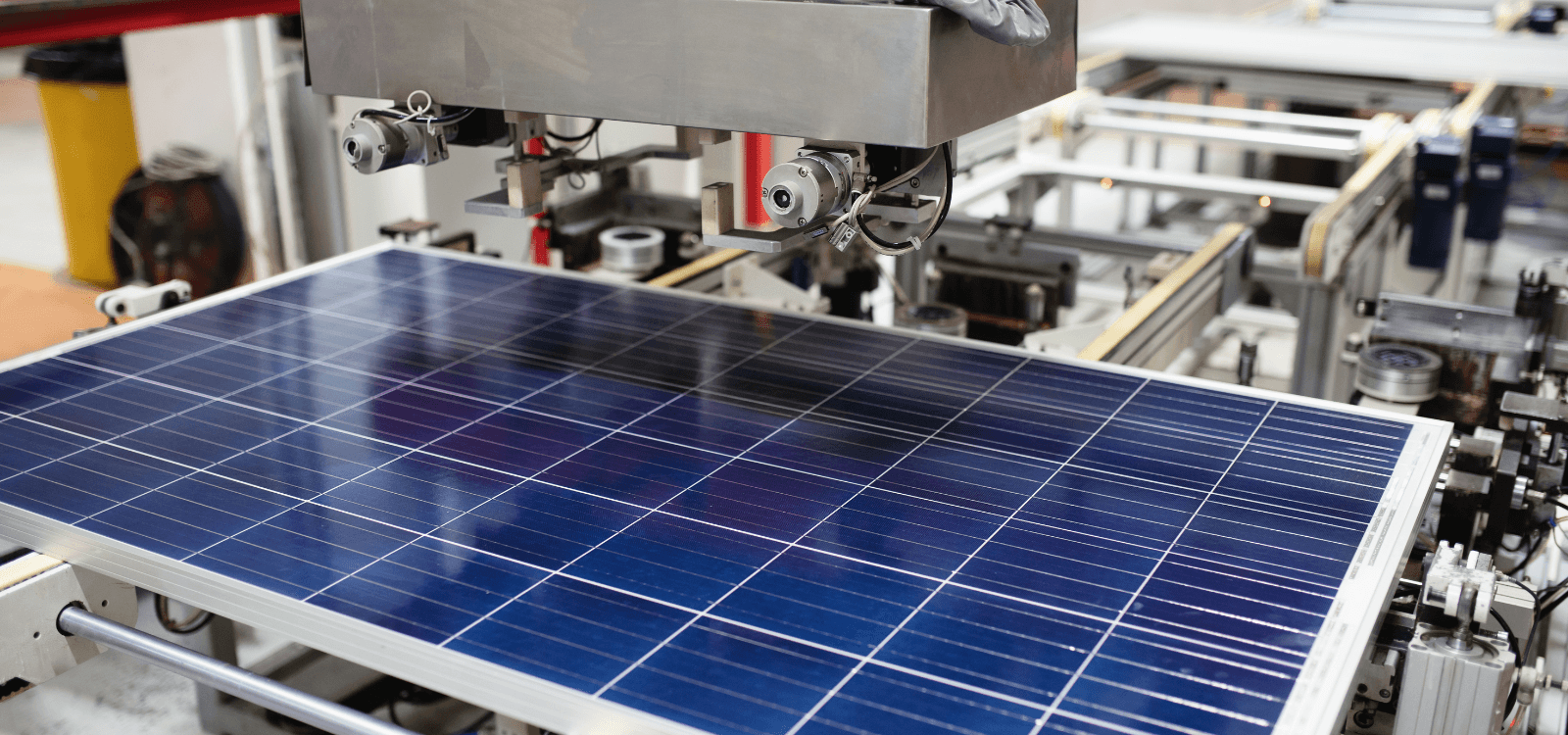
Perovskite-silicon tandem solar is moving from lab results to real production. A new U.S. factory is testing whether higher-efficiency panels can be manufactured at scale, but key questions on durability and consistency remain.
Perovskite Solar Is Moving From Lab to Factory
Perovskite solar has delivered strong results in the lab for years. The challenge has been turning that performance into something that can be manufactured at scale.
Tandem PV is now testing that transition with a 65,000-square-foot factory in Fremont, California.
The facility is already operating, but at demonstration scale. The goal is not full production yet. It is to prove that the process works outside controlled lab conditions.
A Small but Important Step
The production line is designed for about 40 MW of annual capacity. That is small compared to large U.S. solar factories, which produce 5 to 10+ GW per year.
But scale is not the point yet. This phase is about validation.
Right now, the factory is producing around 10 to 20 panels per day as the process is refined. The next step is to move from small batches to consistent, repeatable output.
How Tandem Panels Work
The concept is simple.
Traditional silicon panels convert sunlight at around 22% efficiency. Tandem panels add a perovskite layer on top of the silicon cell, creating a stacked structure that captures more of the solar spectrum.
Tandem PV says this design can reach about 30% efficiency today.
That could allow projects to generate roughly one-third more energy from the same footprint.
More Headroom Than Silicon Alone
Silicon technology is already approaching its practical limits, typically in the high 20% range. Tandem designs offer more room to improve, with a theoretical ceiling closer to 45%.
That is what makes perovskites attractive. Not just higher efficiency today, but more room for future gains.
From Lab Scale to Real Panels
One key milestone is size.
Tandem says its current panels are about 60 times larger than earlier lab-scale versions. That shift is critical for real-world deployment.
The focus now is on translating lab processes into manufacturing equipment that can produce panels reliably at scale.
What Still Needs to Be Proven
There are still open questions.
- ●Long-term durability at scale
- ●Performance in real-world conditions
- ●Manufacturing consistency at higher volumes
These are the issues that have slowed perovskite adoption so far.
What This Means for Solar Manufacturing
This factory does not prove that perovskite panels are ready for mass deployment. It tests whether they can move from lab results to repeatable production.
Tandem PV plans to begin commercial sales in 2026, with larger-scale manufacturing targeted for 2028.
The Bigger Picture
If perovskite-silicon tandem panels can be produced reliably at scale, they could change how solar systems are designed and deployed.
The shift would not come from building more panels, but from getting more output from each one.
This facility is an early step in that direction.
Ready to Discuss Your Project?
Get your instant estimate or talk to our team about your legacy solar project.


