

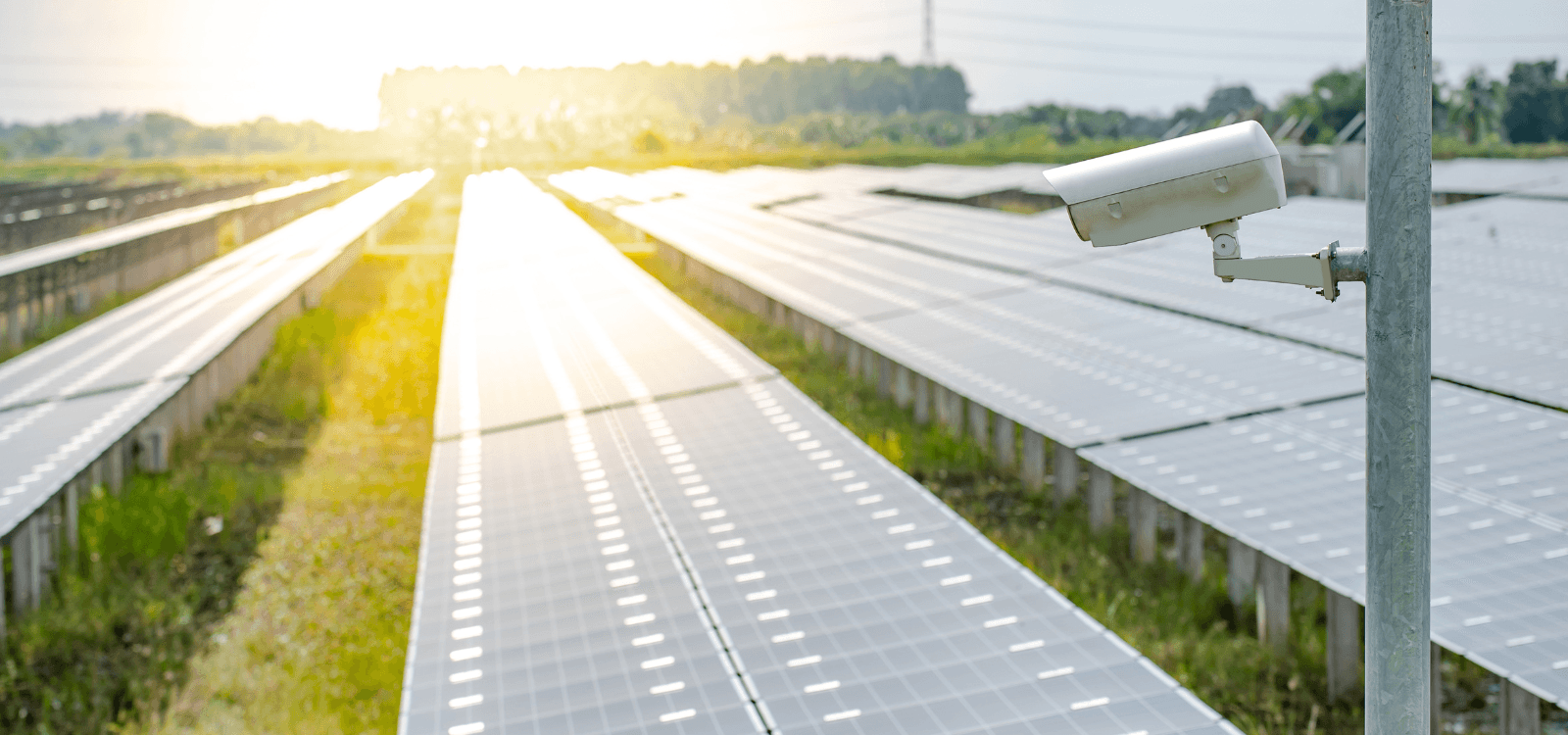
Solar construction sites are a growing theft target — here's why security needs to start on day one, not after the fence goes up.
Solar just hit a milestone worth noting: it generated more electricity than coal in the U.S. for a full month, for the first time on record. That kind of growth is good news for the industry — but it also means more projects under construction at any given moment, often with valuable equipment on site before the fence, power, or monitoring systems are in place.
A recent pv magazine USA report makes a point that surprises a lot of solar owners: the highest-risk window for a project isn't after it starts generating power. It's during construction.
When Are Solar Projects Most Vulnerable to Theft?
Solar sites are most exposed to theft and vandalism during construction, when panels, inverters, and copper wiring are already delivered but permanent fencing, power, and monitoring haven't gone in yet. That gap between "equipment on site" and "site secured" can stretch for weeks on a large project.
Construction crews typically prioritize getting materials staged and installation moving. Security infrastructure — fencing, cameras, lighting — often lags behind, which is exactly the window a thief is looking for.
Is This Actually a Real Risk, or a Theoretical One?
It's real, and it's already happening. Authorities in North Carolina recently charged a man with stealing roughly 2,000 feet of copper wiring and dozens of connectors from two solar farms, a loss estimated at around $11,000.
Copper wiring is a particularly attractive target because it's easy to strip out, easy to sell, and hard to trace once it's gone. Panels and inverters carry serial numbers and are bulkier to move, but wiring theft alone can delay a project and add real, unplanned cost.
The financial hit isn't limited to the value of what's stolen, either. A theft mid-construction can push back the interconnection timeline, trigger a re-inspection, and in some cases require re-ordering materials that already had long lead times. On a project running on a tight schedule to qualify for a rate or incentive deadline, that delay can end up costing more than the copper itself.
What Should Be in Place Before Materials Arrive?
The pv magazine reporting frames this as a sequencing problem, not a budgeting one — most developers already plan for security eventually, just not early enough. The fix is straightforward: treat the first security layer as a prerequisite for the first equipment delivery, not a task that happens somewhere in the middle of the build schedule.
In practice, that means perimeter fencing and at least basic camera coverage should go up before, or at the same time as, the first pallet of panels or spool of wiring arrives on site. Waiting until framing or racking is underway leaves exactly the exposure window the North Carolina case shows up in.
Why Does This Risk Grow as Projects Get Bigger?
A security plan built for a small commercial rooftop doesn't scale cleanly to a project spanning hundreds of acres. Larger sites mean longer perimeters, more staging areas, and more entry points — all of which take more time and coordination to monitor.
As more projects break ground across the country, the total number of active construction sites keeps climbing. Each one represents a window of exposure, and collectively they add up to a much larger target for anyone looking to steal materials.
What Does a Layered Security Strategy Actually Look Like?
Rather than treating security as a single fix, the recommended approach layers protections so they grow with the project:
- ●Perimeter fencing. The first physical barrier, ideally in place before major equipment deliveries begin.
- ●Surveillance cameras. Fixed or mobile units covering staging areas and equipment laydown zones.
- ●Mobile security units. Patrols or rapid-response coverage for sites too large for fixed cameras alone.
- ●Real-time monitoring. Live alerts that let a response team act before theft or vandalism escalates, rather than discovering the loss the next morning.
Each layer covers a gap the others don't. Fencing deters casual entry but won't stop someone determined; cameras document what happens but don't physically prevent it; real-time monitoring closes that gap by triggering a response while it's still in progress.
Does Construction-Phase Security Affect Insurance and Financing?
It can. Builder's risk policies and construction financing agreements increasingly ask what security measures are in place on site, and a documented plan — fencing, cameras, monitored response — can affect both premiums and lender comfort with the project timeline. An owner who can point to a layered plan going into a claim, rather than reconstructing one after a loss, is generally in a stronger position.
This is also where budgeting matters. Security costs are easiest to absorb when they're built into the original project budget alongside grading, racking, and interconnection fees. Treating them as a late addition, after a theft has already happened, means paying for the same protection at a worse time and often at a higher cost.
How Should Owners Plan for Site Security?
The clearest takeaway from the pv magazine reporting is a sequencing one: physical security should be part of the construction plan from day one, not something added after a theft already happened. Budgeting for fencing and monitoring alongside the interconnection timeline, rather than after materials are already delivered, closes the exact gap that incidents like the North Carolina case exploit.
For owners managing an existing portfolio, this is also a reminder that protection doesn't end at commissioning — the same layered thinking applies to monitoring and maintaining a system long after construction wraps. As more capacity gets built, the projects that plan for security early are the ones least likely to end up as a line item in next year's theft report.
Ready to Discuss Your Project?
Get your instant estimate or talk to our team about your legacy solar project.


