

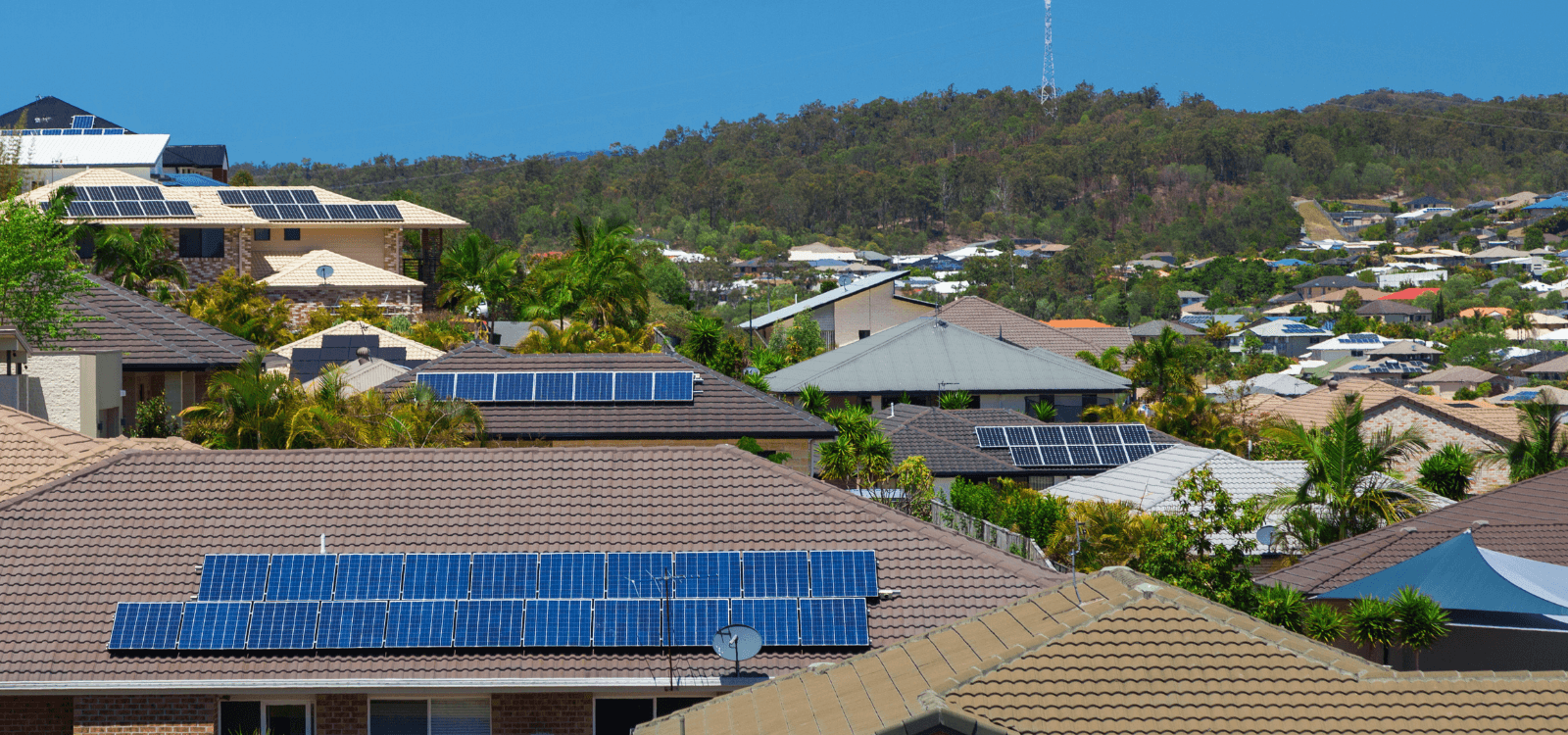
Virginia's Switch Together is the first statewide solar group purchasing program. How its reverse auction works and what it means for solar owners.
Virginia's Switch Together is the first statewide solar group purchasing program in the country, and it is cutting rooftop solar installation prices by an average of 23% without any state funding. According to the governor's office, that works out to about $6,300 on a typical system.
Instead of each homeowner shopping for solar alone, the program pools customers and makes vetted installers compete for the group's business. The 2026 sign-up window runs through October 15.
If you own a commercial solar system, you can't join this program. But it is a useful lesson in how competition changes solar pricing, and in how to read a quote for your own system.
How Does a Solar Group Purchasing Program Work?
A solar group purchasing program pools many buyers into one purchase, so installers compete for the whole group instead of one roof at a time. Switch Together is run by Solar United Neighbors, a national nonprofit, with the support of Governor Abigail Spanberger's office and local governments.
Residents, small businesses, and nonprofits sign up and get a no-obligation recommendation on whether solar makes sense for them. Those who move ahead sign contracts. The state is not putting money into the program.
What Is a Reverse Auction for Solar Installers?
In a reverse auction, installers bid the price down to win the work, so the lowest qualified offer gets the contract instead of the highest bid. The word "qualified" matters here, because the auction is limited to installers the program has vetted.
That vetting is also the program's main constraint. According to Canary Media, finding enough trusted installers in every part of the state is a limiting factor, and the far southwest corner of Virginia was left out of this year's campaign because installers there could not be vetted in time.
How Much Can Solar Group Buying Save?
The governor's office reports an average discount of 23% on home and business solar installations, or about $6,300 on a typical system. The numbers vary by location and by product:
- ●Installation discount. Canary Media reports savings ranging from 20% to 30% depending on where you live.
- ●Bill savings. The program is expected to cut about $2,200 a year from the average household's utility bill, based on a U.S. Treasury estimate cited by the governor's office. Any savings estimate is only as good as the electricity price behind it, and prices have been moving.
- ●Add-ons. Participants can also get discounts on battery storage, and in many locations on heat pumps.
Why Are Today's Solar Prices Different From the Last Few Years?
Today's prices aren't directly comparable to what buyers saw through 2025, because the 30% federal residential solar tax credit ended for expenditures after December 31, 2025. Through 2025, a homeowner paid the installed price and then claimed up to 30% back on their taxes. According to GreenLancer, the One Big Beautiful Bill Act ended that credit nearly a decade ahead of its original 2032 schedule.
That changes how to read a 23% group discount. It comes off today's price with no tax credit on top, so a fair comparison is what a buyer pays net of everything, then versus now. The program's average discount doesn't answer that by itself, and price histories from the past few years describe a market with the credit built in.
The credit's end is also why this program matters. Residential installations are projected to fall 21% in 2026, and a lower upfront price helps fill part of that gap.
How Fast Are Electricity Prices Really Rising?
Long-run averages understate the recent change, and most studies of data centers stop before it. The Energy Information Administration's May 2026 outlook puts the average residential price at 18.2 cents per kilowatt-hour this year, nearly 5% above 2025, with up to 7% annual growth in some East Coast areas over two years, as reported by Utility Dive.
A Rutgers analysis of 2014 to 2024 found no robust, detectable effect from data centers on residential bills in the ZIP codes it studied. But it called that a "not yet" result: most of those data centers predate the AI boom, and PJM's capacity price had already jumped from $28.92 to $269.92 per megawatt-day.
That wholesale jump reached customers in mid-2025, as we covered in New Jersey's electric bill spike. A 5- or 10-year average blends a calm stretch with a sharp one, so judge savings against the last 18 months, and against your own utility's current rates and pending rate cases rather than a national figure.
Does Solar Group Purchasing Actually Work?
It has a track record at the local level, and Virginia is now testing whether it scales statewide. Solar United Neighbors has run group-purchasing campaigns in Virginia communities for years.
Richmond shows what outreach can add. A campaign promoted only by the nonprofit produced about 20 new rooftop systems, and a second push promoted directly by the local government produced roughly three times as many.
The statewide numbers are still early. As of late August, more than 4,300 residents, small businesses, and nonprofits had signed up for information and about 120 had signed contracts. The program's Virginia director expects about 500 signed contracts, roughly 4 MW of solar, by the October 15 close.
What Are the Downsides of a Solar Group Buy?
The discount does not remove the work of getting a system approved, built, and connected. One Virginia homeowner who went through the program said the installation took more project management than expected, particularly around approvals and interconnection.
The result was still strong. After seven months, that system was producing about 30% more electricity than forecast, and the homeowner's bills were essentially $0 aside from the monthly connection fee.
Other limits to keep in mind:
- ●A deadline. Each campaign has a closing date, and this year's is October 15.
- ●Uneven coverage. Installer availability decides where the program can operate.
Can Other States Copy Virginia's Solar Bulk-Buy Model?
They can try, because the model does not need state funding, but it depends on vetted installers and a partner who can do outreach. Solar United Neighbors' Virginia program director sees it as a model other states could duplicate.
The timing fits a wider affordability push. Virginia has also moved to expand shared solar and streamline permitting, and electricity bills have been rising faster than inflation across much of the country.
What Does Solar Group Purchasing Mean for Commercial Solar Owners? (DGE Take)
Switch Together is built for homes, small businesses, and nonprofits, so it will not directly discount a commercial system you already own. What it does show is how much price pressure a transparent, competitive process can create.
- ●Don't judge a quote in isolation. If competitive bidding moves installation prices by about 23% on average in this program, a single quote is a weak benchmark. When you need repairs or replacement equipment, ask for itemized quotes that separate required work from optional upgrades, as we explain in how to tell if a commercial solar repair quote is right.
- ●Expect the paperwork to take effort. The Virginia homeowner's experience is a reminder that approvals and utility interconnection can take as much attention as the equipment itself.
- ●Check recent bills, not long averages. Pull your last 18 months of utility bills and compare the per-kilowatt-hour cost with what your original projections assumed. A working system offsets power that keeps getting more expensive, but only if it is producing. If you are not sure, start with whether your commercial solar system is still performing.
Start With a Ballpark Estimate
Solar prices and electricity prices are both moving fast right now. The more immediate question for an existing commercial system is what it is worth today.
Enter your ZIP code, project type, system size, and the year it went live to see what your project may be worth. It takes about a minute and doesn't commit you to anything.
Source: Virginia to cut rooftop solar costs with nation-first bulk-buy program, Canary Media. Additional reporting: Governor Spanberger announces first-in-the-nation energy affordability initiative, Office of the Governor of Virginia.
Ready to Discuss Your Project?
Get your instant estimate or talk to our team about your legacy solar project.


