

China installed 212 GW of solar in six months, more than the entire U.S. fleet, and its emissions fell 1%. What its solar push means for the energy race.
China's carbon emissions fell 1% in the first half of 2025 compared with a year earlier, according to the Centre for Research on Energy and Clean Air. That happened even as the country's electricity demand kept growing.
The driver is solar, on a scale that's hard to picture. In the first six months of 2025 alone, China installed 212 GW of solar, more than the entire U.S. solar fleet at the end of 2024.
Here is what China is building, what it means for emissions, and what it says about the pace of the global energy transition.
How Much Solar Is China Building?
China installed 212 GW of solar capacity in the first half of 2025, more than the 178 GW the entire U.S. had installed by the end of 2024, according to the Associated Press.
Solar has already overtaken hydropower in China and was on track to pass wind as the country's largest source of clean energy in 2025, according to the AP.
That pace is part of a global surge. We covered how global solar capacity passed 3 terawatts, with the third terawatt taking just 19 months.
What Is the World's Largest Solar Farm?
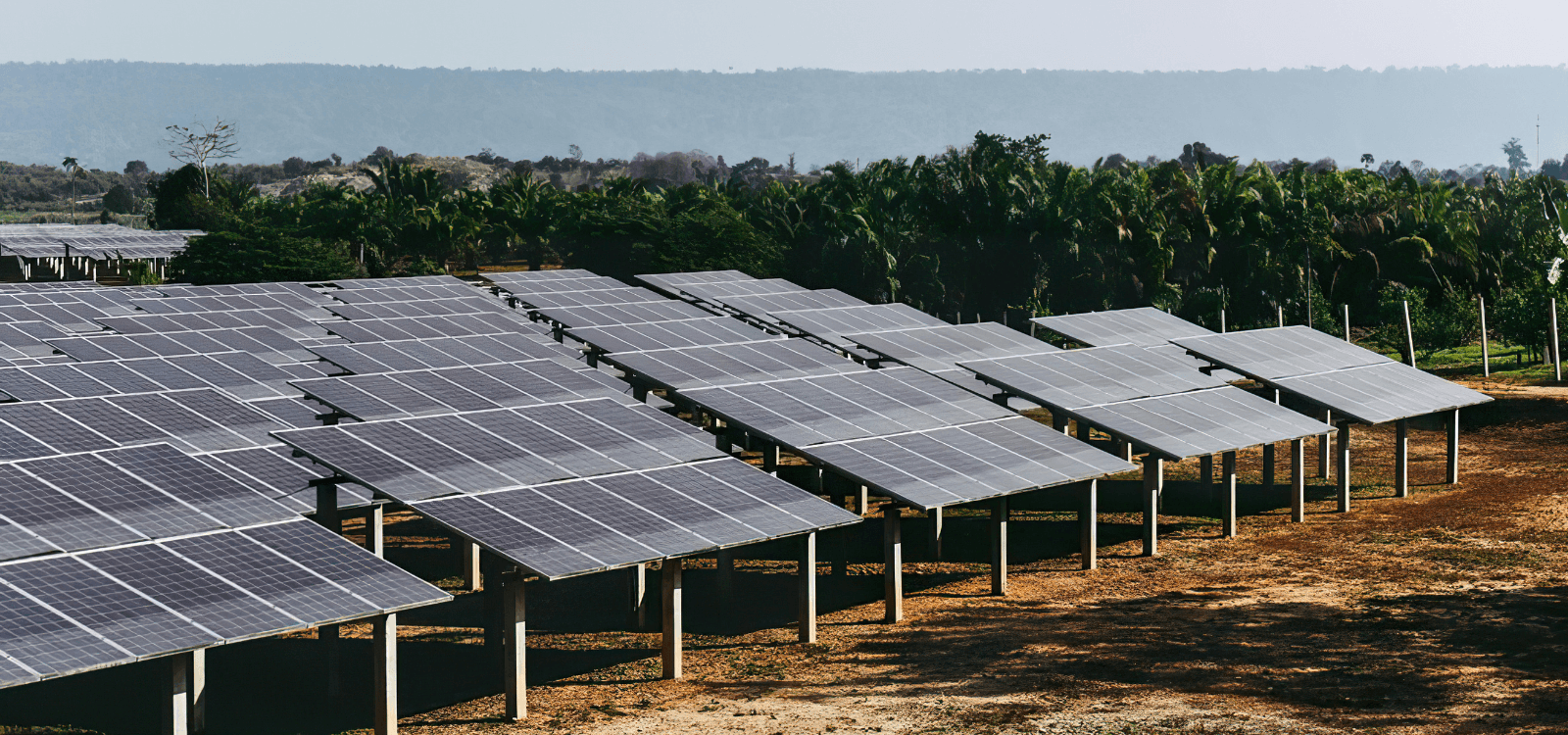
China is building what will be the world's largest solar farm on the Tibetan Plateau in Qinghai province's Hainan Prefecture, covering about 610 square kilometers, roughly the size of Chicago, according to the AP.
The key details:
- ●Area. About 610 square kilometers.
- ●Panels. About 7 million.
- ●Homes powered. About 5 million.
- ●Land use. Thousands of sheep graze on the vegetation beneath the panels.
Wang Anwei, the energy chief of Hainan Prefecture, described the project as a "win-win" for production, ecology, and the local community. The panels act as windbreaks, reducing dust and soil evaporation.
How Does the Solar Farm Share Land With Grazing?
The Qinghai project combines solar with sheep grazing, and the panels themselves help the land by acting as windbreaks that reduce dust and soil evaporation, according to the AP.
That matters on the dry, windy Tibetan Plateau. Shade and shelter under the panels help vegetation grow, and sheep graze on that vegetation, which keeps it from becoming overgrown.
Dual-use models are spreading in the U.S. too. New Jersey approved 16 dual-use solar projects that keep farmland in production under the panels. Designs like these can reduce the land-use conflicts that slow many solar projects.
Are China's Emissions Really Falling?
CREA found China's carbon emissions fell 1% in the first half of 2025, a sign that clean energy growth is starting to outpace rising demand, according to the AP.
Li Shuo of the Asia Society Policy Institute called it "a moment of global significance, offering a rare glimmer of hope in an otherwise bleak climate landscape."
But the decline is small and early. CREA's Lauri Myllyvirta said "China needs to get to that 3% territory as soon as possible" to stay on track for its goal of carbon neutrality by 2060.
China is showing what a rapid energy transition looks like at scale. Whether it can sustain it is the harder question.
What Still Stands in China's Way?
Coal remains China's largest source of electricity, and the grid still struggles to absorb large amounts of solar and wind, according to the AP.
The main challenges:
- ●Coal dependence. Coal plants still supply the largest share of China's power.
- ●Grid flexibility. Moving solar from remote western regions to eastern cities requires major transmission.
- ●Storage. Solar needs to be shifted into evening and winter peaks.
- ●Pace. Reaching a sustained 3% annual emissions decline will take faster change.
How Does the U.S. Compare?
The U.S. is adding solar too, but at a much smaller scale, and federal policy is now slowing new clean energy development rather than accelerating it.
The gap between the two countries' approaches is widening. We covered that in the Trump-China energy splitscreen.
China's manufacturing dominance also shapes U.S. costs. China doesn't set U.S. electricity prices directly, but its role in energy manufacturing affects how fast and how cheaply the U.S. can build.
What Can the U.S. Learn From China's Solar Push?
China's experience shows that speed and scale matter, and that clean energy can grow fast enough to bend emissions even while demand rises.
The U.S. doesn't need to copy China's model to learn from it. The takeaways:
- ●Build fast. Streamlined approvals let projects come online quickly.
- ●Plan the grid. Transmission and storage have to keep pace with generation.
- ●Use land well. Dual-use models like grazing under panels reduce land conflicts.
- ●Use what exists. Getting full output from existing sites adds capacity without new land.
What Does This Mean for Existing Solar Owners?
As global solar keeps growing and U.S. policy slows new projects, the solar already operating in the U.S. becomes a more important part of the supply picture.
Many commercial systems installed in the 2010s are losing output to aging inverters or degraded panels. Repowering an aging PV system restores that output using the land and grid connection already in place.
That's one of the fastest ways to add clean capacity in the U.S. right now.
Start With a Ballpark Estimate
If you own a commercial solar system that's producing less than it used to, it may be worth more than you think. Find out what your existing solar project may be worth before deciding whether to repair, repower, or sell.
Ready to Discuss Your Project?
Get your instant estimate or talk to our team about your legacy solar project.


