

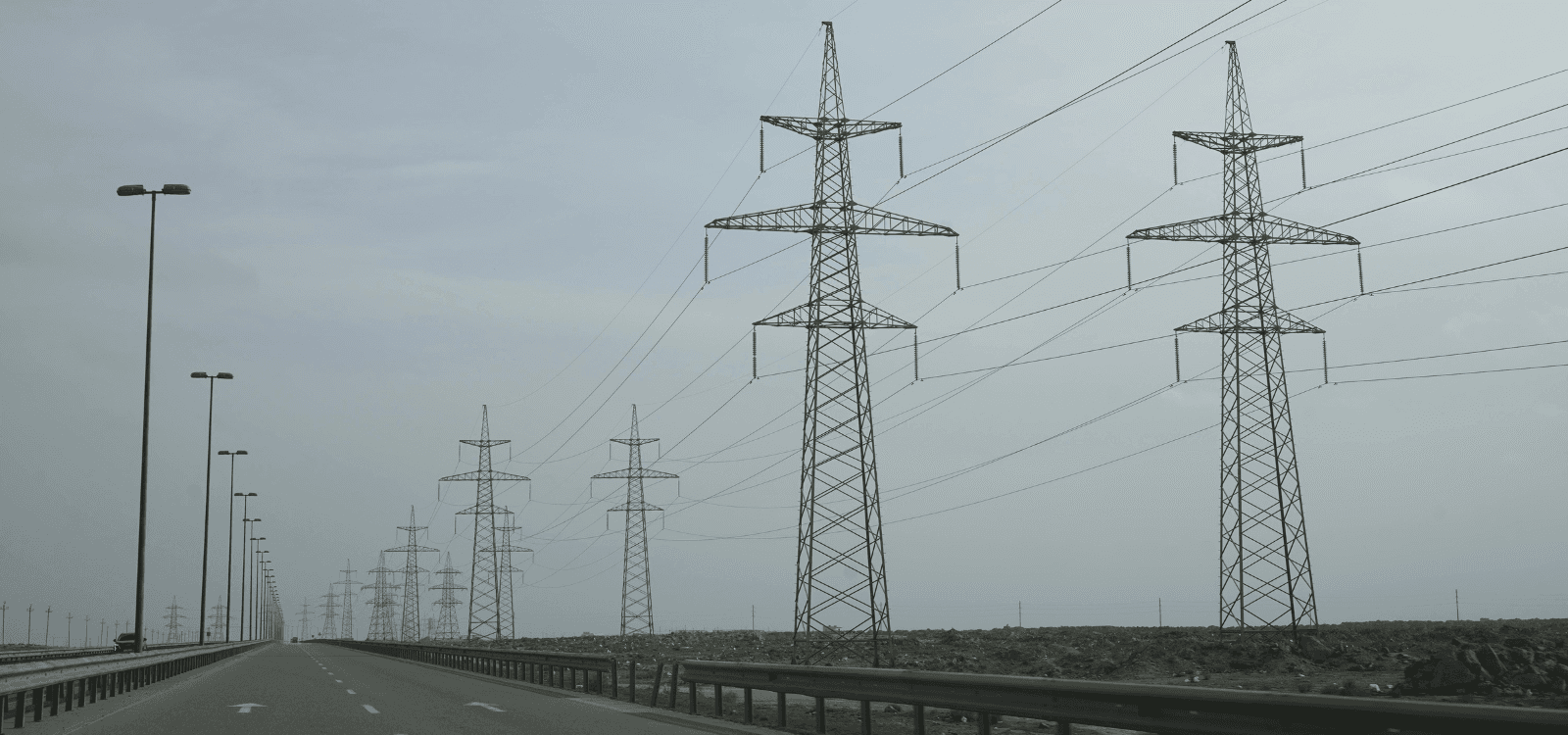
FERC approved MISO's transmission expansion while a DOE order keeps an aging coal plant online — the grid's core tension, explained.
The U.S. grid is trying to do two things at once: build the transmission it will need for the next decade, and keep enough power flowing today. Two recent regulatory actions inside the Midcontinent Independent System Operator's (MISO) footprint show just how much tension sits between those goals.
What Did FERC Approve for MISO's Transmission Plan?
The Federal Energy Regulatory Commission (FERC) approved a cost-allocation framework that lets MISO build transmission projects inside neighboring PJM Interconnection's territory, clearing more than $900 million in interregional grid upgrades.
Under the approved framework, Commonwealth Edison will build about $904 million of projects, and Duke Ohio will build another $5.3 million. The projects are part of MISO's Tranche 2.1 transmission plan, which the MISO board approved in December 2024.
The Electricity Transmission Competition Coalition and the Industrial Energy Consumers of America argued the projects should instead go through MISO's competitive bidding process, which typically opens development to a wider pool of transmission developers rather than assigning the work directly to the incumbent utility. FERC rejected that request, ruling that MISO does not have the authority to facilitate or require transmission development in another grid operator's region.
That jurisdictional line matters more than it might seem. It means a project MISO decides it needs, sited inside PJM's footprint, still has to be built under PJM's rules, by a utility PJM recognizes — even though the reliability benefit flows back to MISO's side of the map. FERC's approval effectively confirms that this kind of cross-territory dependency is here to stay, at least until the two grid operators agree on a cleaner way to plan and pay for shared infrastructure.
What Is Actually in Tranche 2.1?
The plan reaches well beyond this one cost dispute.
- ●Scope. 24 projects totaling about 3,631 miles of new and upgraded transmission lines.
- ●Footprint. Spans nine Midwestern states.
- ●Anchor project. Includes a 765-kV transmission backbone, one of the highest-voltage lines built in the U.S. in years.
- ●Approval date. Signed off by MISO's board in December 2024.
Why Transmission Projects Cross Grid-Operator Boundaries
MISO and PJM operate separate regional systems, but electricity flows between them regardless of where the line on a map gets drawn. A transmission project built in one region can still improve reliability, reduce congestion, and help move power and connect new resources across a wider area.
FERC Commissioners Judy Chang and David Rosner said transmission planners should make interregional transmission a "more regular and intentional feature" of their work — a signal that projects like MISO's Tranche 2.1 buildout may become more common, not less, as grid operators lean on each other's territory to keep power moving.
Why a Coal Plant Got a Reprieve Instead of Retiring
A DOE emergency order keeps Michigan's 1,420-MW J.H. Campbell coal plant online through November 14, 2026, more than a year past its original retirement date.
The order, issued by U.S. Energy Secretary Chris Wright, took effect August 17 and directs MISO and Consumers Energy to keep the plant available to operate. Campbell was originally scheduled to retire on May 31, 2025. The Department of Energy said the plant has continued running during periods of high electricity demand and low intermittent energy production, and that it remains important to MISO's operations.
What NERC's Reliability Warning Adds to the Picture
The order comes as MISO faces growing reliability concerns of its own. NERC's 2025 Long-Term Reliability Assessment identified MISO as being at high risk of energy shortfalls over the next five years, warning that projected resource additions are not keeping pace with escalating demand forecasts and announced generator retirements.
That's the core bind regulators are managing in real time. Retire an aging coal plant on schedule and the region loses dependable capacity before its replacement is ready. Keep the plant running past its planned retirement and the region buys time, but at the cost of emissions, maintenance risk on old equipment, and a delay that has to end eventually anyway.
Put together, these three developments describe the same underlying problem from three angles: MISO needs new transmission to move power where it's needed, it needs new generation to replace what's retiring, and it needs both to happen before the gap between demand and dependable capacity gets wider. None of the three moves fast. Transmission projects of this scale routinely take the better part of a decade from planning to energization, and large generation projects — solar, storage, or otherwise — face their own interconnection queues before they can start delivering power.
What This Means for Owners of Existing Solar Systems
New transmission takes years to permit and build. Retiring generation can get an emergency reprieve, but not indefinitely. In the meantime, grid operators are leaning harder on every dependable resource already connected to the system — including solar assets that have been running quietly for a decade or more.
That backdrop changes the calculus for owners sitting on an aging or underperforming commercial system. A system with declining output, an obsolete inverter, or an unclear ownership picture isn't just a maintenance question anymore — it's an asset whose value depends partly on how tight the regional grid gets over the next few years. As dependable capacity gets scarcer, the systems still producing at or near their original output become more valuable, not less, while the ones quietly underperforming become harder to justify holding onto as-is.
Owners in MISO territory and neighboring PJM states are, in effect, sitting on a piece of the same capacity crunch these two regulatory actions are trying to manage. Understanding what your project may be worth today, before that picture shifts further, is worth doing sooner rather than later — whether the answer turns out to be repower, sell, or simply confirm the system is still pulling its weight.
Start With a Ballpark Estimate
MISO's transmission buildout and its coal-plant reprieve are really the same story: the grid needs more of everything, and it needs it faster than new infrastructure can be built. Whether that pushes system values up as reliable capacity gets scarcer, or pushes owners to repower and modernize aging equipment, the answer starts with knowing where your own system actually stands.
Ready to Discuss Your Project?
Get your instant estimate or talk to our team about your legacy solar project.


