

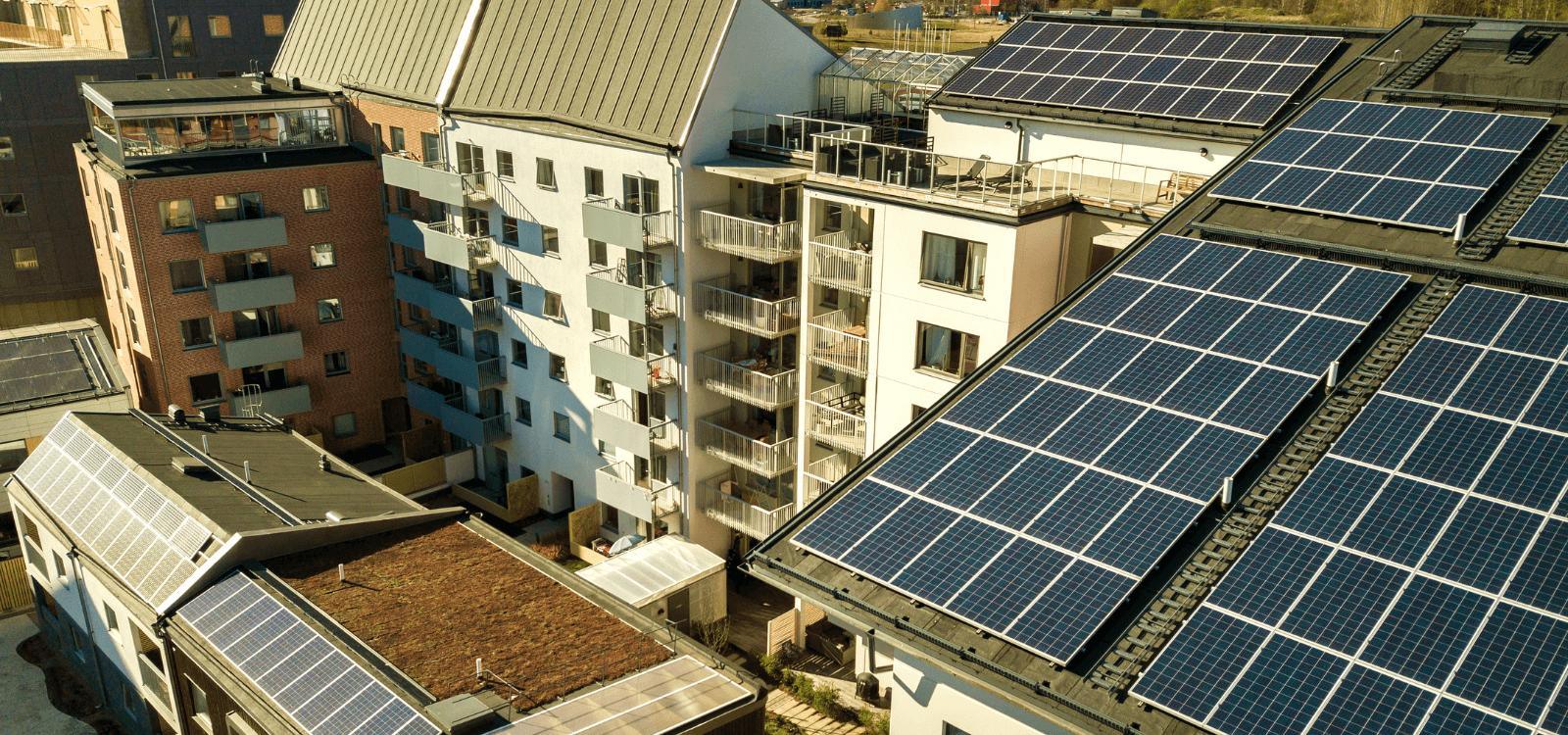
A 13 MW solar portfolio in Rhode Island shares bill credits with nine public housing authorities, saving $35M+ over 20 years. How the model works.
In September 2025, Veolia and Nautilus Solar Energy finished the last of three solar fields built to benefit public housing in Rhode Island. The 6.5 MW "Exeter Mail" project joins two others, bringing the portfolio to more than 13 MW.
The power isn't sold to the highest bidder. Its value is turned into utility bill credits shared by nine public housing authorities across the state, with more than $35 million in projected savings over 20 years.
Here is how the Rhode Island portfolio works, why the credit-sharing model matters, and what it shows about who benefits from solar.
What Is the Rhode Island Public Housing Solar Portfolio?
The portfolio is three solar fields in Rhode Island, totaling more than 13 MW, whose output generates bill credits for nine public housing authorities, according to Solar Power World. The largest, the 6.5 MW Exeter Mail project, was completed in September 2025.
The key details:
- ●Developers. Nautilus Solar Energy led development, permitting, and construction; Veolia served as procurement agent and technical advisor.
- ●Size. More than 13 MW across three sites, mainly in Exeter and Smithfield.
- ●Beneficiaries. Nine public housing authorities.
- ●Savings. More than $35 million projected over 20 years.
Which Housing Authorities Benefit?
Nine Rhode Island public housing authorities share the credits: Providence, North Providence, Newport, Cranston, Smithfield, Warwick, Warren, Bristol, and Lincoln, according to Solar Power World.
The credits lower each authority's utility costs. That reduces operating budgets and, in turn, energy costs for families living in public housing.
Karin Hamel of Veolia described it this way: "This project is a perfect example of how green energy can be used for good."
How Does Virtual Net Metering Work?
Virtual net metering lets multiple utility accounts share bill credits from a single solar project that isn't located on their property.
Here's the basic flow:
- ●Generation. The solar fields produce power and send it to the grid.
- ●Credit value. The value of that power is converted into bill credits.
- ●Allocation. Credits are split among participating accounts.
- ●Savings. Each account sees lower utility bills.
By pooling together, the housing authorities could secure one renewable contract and share the benefits, instead of each trying to build its own project. Rhode Island's rules make that possible.
Pooling also solves a practical problem. Many public housing properties don't have the roof space, structural capacity, or staff to host and manage solar on site. An off-site portfolio lets them benefit without taking on construction or ownership.
The clean energy transition isn't only happening at utility scale. It's showing up in the monthly bills of families who need relief most.
Why Does This Matter in a High-Cost State?
Rhode Island has some of the highest electricity prices in the country, so bill credits make a real difference for public housing budgets.
Energy costs hit low-income households hardest, because they make up a larger share of the budget. For housing authorities, lower utility costs free up money for maintenance and services.
That relief matters as electricity prices rise nationally. We've covered how U.S. electricity bills are rising faster than inflation, with about one in six households behind on energy bills.
Are Other States Using Similar Models?
Yes. Shared and community solar programs are expanding in several states, often with a focus on lower-income customers.
New Jersey approved a 3 GW community solar expansion, and Virginia passed a package to expand shared solar. Boise, Idaho, launched a non-subscription community solar pilot funded by city solar savings.
Each model differs, but the idea is the same: let people benefit from solar even if they can't put panels on their own roof.
Why Is Solar Well Suited to This Kind of Relief?
Solar can be deployed in years rather than decades, and when structured well, its benefits can reach the communities that face the heaviest energy burden.
When demand grows faster than supply, customers pay the price. That's what happened in New Jersey, where PJM capacity costs sent some bills up by several hundred percent.
Projects like Rhode Island's show another path: add local supply quickly and direct the savings to those who need them.
What Happens to These Projects Over 20 Years?
Long-term savings depend on the solar fields producing as expected for the full contract, which requires ongoing maintenance and monitoring.
The $35 million estimate assumes the systems keep performing. Inverters typically need replacement during a project's life, and panels slowly lose output.
That's true for any long-term solar contract, whether the beneficiary is a housing authority, a school district, or a business. Someone has to track production, collect and allocate the credits, and handle repairs. We covered how that breaks down in commercial solar asset management.
What Does This Mean for Existing Solar Owners?
Solar systems that generate bill credits for others are only as valuable as their output, so aging or underperforming systems can quietly cut the savings they were built to deliver.
Many commercial and community systems installed in the 2010s are losing output to aging inverters or degraded panels. Repowering an aging PV system can restore that output and the credits that come with it.
Start With a Ballpark Estimate
If you own an existing commercial or community solar system, find out what your existing solar project may be worth before deciding whether to repair, repower, or sell.
Source: Solar Power World, "Rhode Island solar portfolio benefiting public housing residents now complete"
Ready to Discuss Your Project?
Get your instant estimate or talk to our team about your legacy solar project.


